EFFECTS OF ACTIVE VERSUS PASSIVE RECOVERY ON POWER OUTPUT DURING REPEATED BOUTS OF SHORT TERM, HIGH INTENSITY EXERCISE

ATP repletion following exhaustive exercise is approximated to be 90-95% complete in 3 minutes, and is crucial in the performance of short duration, high intensity work. Few studies appear to have used this 3-minute interval in the investigation of recovery modes, blood lactate accumulation and power output. Thus, our aim was to investigate changes in peak power (PP), average power (AP) and blood lactate during repeated bouts of high intensity, short duration cycling, comprising active and passive recovery modes lasting 3 minutes. Seven male cyclists (age 21.8±3.3 yrs, mass 73.0±3.8kgs, height 177.3±3.4cm) performed both an active (3 min at 80rpm & 1kg resistance) and a passive recovery (no work between bouts) protocol. Following a warm-up, subjects performed six 15-second maximal sprints against a fixed workload of 5.5kg. Mean PP across the six trials was 775±11.2Watts (W) and 772±33.4W for active and passive protocols respectively; whereas mean AP was 671±26.4W and 664±10.0W, respectively. Neither was significantly different. There was a significant difference within trials for both peak power and average power (p<0.05), with both values decreasing over time. However, the decrease was significantly smaller for both PP and AP values during the active recovery protocol (p<0.05). In the current study, variation in power output cannot be explained by lactate values, as values did not differ between the active and passive protocol (p=0.37). Lactate values did differ significantly between trials within protocols (p<0.05). The results of this study suggest that an active recovery of 3 minutes between high intensity, short duration exercise bouts significantly increases PP and AP compared to a passive recovery, irrespective of changes in blood lactate levels.

Posted in Reviews | Tagged , , , , , , , , , | Leave a comment

Sports anaemia: facts or fiction?

Sports anaemia: facts or fiction?

There is an ongoing, unsolved debate as to whether iron supplementation, often used by elite athletes, is really necessary or not. A preliminary question that needs an answer is whether the existence of sports anaemia is supported by facts or whether it is fiction. Whether iron should be prescribed to athletes depends on the answer to this preliminary question.

The human body contains approximately 3–5 g of iron. The daily loss of 1–2 mg is replaced by dietary iron (8 mg/day for adult men, and 18 mg/day for adult women) absorbed within the small intestine1 by duodenal enterocytes. Since iron is transported around the body in a redox inactive form, it must be bound to a monomeric glycoprotein known as transferrin, which maintains the iron in a soluble, non-toxic form2. Bound to transferrin, iron is transported in the bloodstream to be released into a variety of cells through specific, cell surface receptors: transferrin receptor 1 (TfR1), commonly found on red blood cells, other erythroid-lineage cells, hepatocytes, monocytes and the blood-brain barrier, or transferrin receptor 2 (TfR2), expressed predominately on liver cells3. The transferrin-transferrin receptor (Tf-TfR) complex undergoes endocytosis, allowing iron to be released from transferrin and transported across the endosomal membrane by protein divalent metal transporter 1 (DMT1)4. Once inside the cell, iron is incorporated into iron-containing proteins, and excess intracellular iron is converted into ferritin, a stored form of iron.

Iron performs many important roles that are directly relevant to an athlete’s performance. It is not surprising that a significant loss of this metal commonly occurs with exercise. Despite this, the body has no innate mechanism to replace the iron losses due to physical activity; thus, a sufficient dietary intake is essential for athletes in periods of heavy training. The mechanisms involved in exercise-induced iron loss are mainly gastrointestinal bleeding, haematuria, sweating and haemolysis57, with inflammation and hormone activity also being relevant, according to the more recent research in this field8. During exercise visceral blood flow can be reduced by more than 50%, due to increased sympathetic nervous system activity, in function of exercise intensity9, with possible necrosis and mucosal bleeding of the gastrointestinal tract10,11. Repeated episodes of training and competition induced blood loss through the gastrointestinal tract may, therefore, contribute to iron deficiency and anaemia within athletes1. Sweating, which is mainly a mechanism of thermoregulation and thus essential during exercise, is also a mechanism by which the body may lose iron and athletes exercising for prolonged periods in multiple training sessions in the heat may incur a cumulative debt, which could ultimately affect body iron status12. Haematuria may be the consequence of mechanical trauma in the glomerulus or of haemolysis6. Furthermore, the movement of the bladder during running may cause bleeding due to microscopic lesions of the interior wall13. Interestingly, McInnis and colleagues6 suggested that the intensity of exercise is the causal mechanism underlying haematuria, since renal blood flow is decreased proportionally to exercise intensity, resulting in an increased filtration fraction and glomerular filtration rate. Haemolysis has been reported during a range of exercise modalities such as swimming, cycling and resistance training14. During non-weight bearing activities, the haemolysis might result from the compression of the blood vessels caused by vigorous contraction of the muscles involved in the activity14. However, haemolysis is due primarily to impact forces resulting from foot-strike15. Haemolysis induces iron loss as a consequence of the destruction of the red blood cell membrane and consequent release of both haemoglobin (Hb) and iron into the surrounding plasma. Since free iron is a poison, its oxidative potential is limited by haptoglobin, a glycoprotein with strong affinity for free Hb which is able to “clean up” the lost contents of haemolysed red blood cells16. When the free Hb concentration in plasma rises, there is a decline in serum haptoglobin levels: this blood profile is common in runners. Interestingly, Miller and colleagues17 found a force-dependent relationship between heel-strike and the degree of haemolysis experienced during running. Indeed, significantly greater changes in serum haptoglobin and plasma free Hb levels were noted during downhill running when compared to an uphill run of equivalent duration and gradient. In accordance with these findings, Telford and colleagues15 showed that an acute, 1 hour session of continuous running at 75% peak VO2max, was responsible for a four-fold increase in the levels of plasma free Hb when compared to a session of cycling of equivalent intensity and duration. After accounting for factors such as circulatory stress, the authors concluded that heel-strike was the major cause of haemolysis during running. Thus, it is possible that a force-dependent relationship between heel-strike and haemolysis may be directly affected by the type of ground surface that the athlete trains on, and the intensity at which the session is conducted since these variables affect the impact force upon heel-strike. However, research in this field is lacking. Furthermore, little is known about the effect of such a stimulus over the course of multiple training sessions, but it has been suggested that a chronic haemolytic stimulus (i.e. consecutive training sessions) might have a cumulative effect on haemolysis and iron deficiency15.

With respect to the many points mentioned above, it is very important to consider the research by Lippi and Guidi18 published in this issue of Blood Transfusion. Indeed, their study is the first that demonstrates that an ultramarathon run is not associated with significant muscle injury, but also that it does not induce clinically significant variations in Hb, haematocrit, red blood cell count, as well as serum potassium. The research confirmed a significant and acute post-exercise decrease in serum haptoglobin, due to a certain degree of haemolysis during the long-distance run, although the concentration of the protein always remained below 0.5 g/L, suggesting that the degree of red blood cell injury might be considered very modest or even clinically negligible. Of note, they found a significant reduction of mean corpuscular volume, as previously observed by Banfi and colleagues in rugby players19, accompanied by an increase of the mean corpuscular Hb concentration. It was suggested that there may be a compensatory mechanism involving a shift of intracellular water outside of the red blood cell to counterbalance the loss of fluid.

Before concluding, two more laboratory tests must be remembered, namely serum transferrin receptor (sTfR) and red blood cell protoporphyrin. The sTfR accurately reflects the demands of bone marrow for iron (i.e., high sTfR concentrations indicate iron-deficient erythropoiesis) and this parameter, especially the sTfR/log(ferritin) index, is less variable than the measurement of ferritin alone20. However, investigations on the influence of physical activity on sTfR expression are limited. In accordance with previous studies, Schumacher et al. found that ferritin concentrations declined after exercise tests in 39 individuals; in contrast, sTfR was unaffected by a 45-minute constant-speed running test at 70% VO2max and decreased only during incremental exercise challenges to the point of exhaustion. Taking the different extracellular fluid shifts into account (haemoconcentration during the exhaustive test and haemodilution during the aerobic test), the investigators concluded that sTfR reflects exercise-induced changes in iron metabolism more reliably than does serum ferritin, which is also influenced by factors other than iron stores21. The hypothesis that iron availability is not limiting for red blood cell production despite reduced concentrations of serum ferritin during exercise is further supported by the observation that free red blood cell protoporphyrin concentrations remain unchanged during intensive training22. The final step of haem biosynthesis is the insertion of ferrous iron into protoporphyrin which depends critically on the availability of iron as a substrate; the first step of haem biosynthesis, the formation of 5-aminolaevulinate, is also subject to regulation by iron. No operational limitation of haem biosynthesis according to the availability of iron in erythrocytes has been demonstrated in athletes.

In conclusion, there is no evidence that iron supplementation increases athletic performance, except in individuals in whom iron deficiency is established. In athletes with low serum ferritin concentrations without anaemia, iron supplementation might be useful; moreover, determination of sTfR or red blood cell-free protoporphyrin concentrations may identify those in whom iron administration is likely to be beneficial. Serum ferritin concentrations should be monitored in conditioned athletes, and physiological decreases in serum ferritin during the early stages of training should be taken into account when individuals are examined and before any decision to give iron is made. Important risk factors contributing to the development of an iron deficiency status are young-adolescent age, female sex, vegetarian diet and Helicobacter pylori infection. Because most studies have shown no beneficial effect of iron supplementation on performance, the uncontrolled use of iron should be avoided. Thus, our answer to the initial question is that we believe that sports anaemia does not exist. Some athletes are anaemic and consequently must be diagnosed and treated.

Footnotes

The Authors declare no conflicts of interest.

References

1. Nielsen P, Nachtigall D. Iron supplementation in athletes. Current recommendations. Sports Med.1998;26:207–16. [PubMed]
2. Andrews NC. Iron metabolism: iron deficiency and iron overload. Annu Rev Genomics Hum Genet.2000;1:75–98. [PubMed]
3. Gomme PT, McCann KB, Bertolini J. Transferrin: structure, function and potential therapeutic actions. Drug Discov Today. 2005;10:267–73. [PubMed]
4. Papanikolaou G, Pantopoulos K. Iron metabolism and toxicity. Toxicol Appl Pharmacol.2005;202:199–211. [PubMed]
5. DeRuisseau KC, Cheuvront SN, Haymes EM, et al. Sweat iron and zinc losses during prolonged exercise. Int J Sport Nutr Exerc Metab. 2002;12:428–37. [PubMed]
6. McInnis MD, Newhouse IJ, von Duvillard SP, et al. The effect of exercise intensity on hematuria in healthy male runners. Eur J Appl Physiol Occup Physiol. 1998;79:99–105. [PubMed]
7. Babic Z, Papa B, Sikirika-Bosnjakovic M, et al. Occult gastrointestinal bleeding in rugby players. J Sports Med Phys Fitness. 2001;41:399–402. [PubMed]
8. Roecker L, Meier-Buttermilch R, Brechtel L, et al. Ironregulatory protein hepcidin is increased in female athletes after a marathon. Eur J Appl Physiol. 2005;95:569–71. [PubMed]
9. Osada T, Katsumura T, Hamaoka T, et al. Reduced blood flow in abdominal viscera measured by Doppler ultrasound during one-legged knee extension. J Appl Physiol. 1999;86:709–19. [PubMed]
10. Gaudin C, Zerath E, Guezennec CY. Gastric lesions secondary to long-distance running. Dig Dis Sci.1990;35:1239–43. [PubMed]
11. Peters HP, De Vries WR, Vanberge-Henegouwen GP, et al. Potential benefits and hazards of physical activity and exercise on the gastrointestinal tract. Gut. 2001;48:435–9. [PMC free article] [PubMed]
12. Waller MF, Haymes EM. The effects of heat and exercise on sweat iron loss. Med Sci Sport Ex.1996;28:197–203.
13. Blacklock NJ. Bladder trauma in the long-distance runner: “10,000 m haematuria” Br J Urol.1977;49:129–32. [PubMed]
14. Selby GB, Eichner ER. Endurance swimming, intravascular hemolysis, anemia, and iron depletion, new perspective on athlete’s anemia. Am J Med. 1986;81:792–4.
15. Telford R, Sly GJ, Hahn AG, et al. Footstrike is the major cause of hemolysis during running. J Appl Physiol. 2003;94:38–42. [PubMed]
16. Giblett ER. The haptoglobin system. Ser Haematol. 1968;1:3–20.
17. Miller B, Pate RR, Burgess W. Foot impact force and intravascular hemolysis during distance running. Int J Sports Med. 1988;9:56–60. [PubMed]
18. Lippi G, Schena F, Salvagno GL, et al. Foot-strike haemolysis after a 60-km ultramarathon. Blood Transfus. 2012;10:377–83.
19. Banfi G, Di Gaetano N, Lopez RS, Melegati G. Decreased mean sphered cell volume values in top-level rugby players are related to the intravascular hemolysis induced by exercise. Lab Hematol.2007;13:103–7. [PubMed]
20. Malczewska J, Szczepanska B, Stupnicki R, et al. The assessment of frequency of iron deficiency in athletes from the transferrin receptor-ferritin index. Int J Sport Nutr Exerc Metab. 2001;11:42–52.[PubMed]
21. Schumacher YO, Schmid A, Konig D, et al. Effects of exercise on soluble transferrin receptor and other variables of the iron status. Br J Sports Med. 2002;36:195–9. [PMC free article] [PubMed]
22. Spodaryk K. Haematological and iron-related parameters of male endurance and strength trained athletes. Eur J Appl Physiol Occup Physiol. 1993;67:66–70. [PubMed
Posted in Reviews | Tagged , , | Leave a comment

Improved VO2max and time trial performance with more high aerobic intensity interval training and reduced training volume; a case study on an elite national cyclist.

This study results could be interesting to those of you who like to compliment their training with some running particularly in the wet and cold months of the year.

1Telemark University College, Department of Sport and Outdoor Life Studies. NO-3800 Bø, Norway; 2Research institute, Modum Bad Psychiatric Centre, Vikersund, Norway; 3Norwegian University of Science and Technology, Department of Circulation and Medical Imaging, Faculty of Medicine, NO-7489 Trondheim, Norway; 4Hokksund Medical Rehabilitation Centre NO- 3300, Norway.

Abstract

The present study investigated to what extent more high aerobic intensity interval training (HAIT) and reduced training volume would influence maximal oxygen uptake (VO2max) and time trial performance in an elite national cyclist in the pre season period.The cyclist was tested for VO2max, cycling economy (Cc), and time trial performance on an ergometer cycle during one year. Training was continuously logged using heart rate monitor during the entire period. Pre season 2011 total monthly training volume was reduced compared to the 2010 pre season, and two HAIT blocks (14 sessions in 9 days and 15 sessions in 10 days) were performed as running. Between the HAIT blocks, three HAIT sessions per week were performed as cycling.From November 2010 to February 2011, the cyclist reduced total average monthly training volume by 18% and cycling training volume by 60%. The amount of training at 90-95% HRpeak increased by 41%. VO2max increased by 10.3% on ergometer cycle. Time trial performance improved by 14.9%. Cc did not change.In conclusion, pre season reduced total training volume but increased amount of HAIT improved VO2max and time trial performance without any changes in Cc. These improvements on cycling appeared despite that the HAIT blocs were performed as running. Reduced training time, and training transfer from running into improved cycling form, may be beneficial for cyclists living in cold climate areas.

Posted in Reviews, Training | Tagged , , , , | Leave a comment

The Cycling Physiology of Miguel Indurain 14 years after Retirement.

USP Araba Sport Clinic, Vitoria-Gasteiz, Basque Country, Spain.

Abstract

Age-related fitness declines in athletes can be due to both aging and detraining. Very little is known about the physiological and performance decline of professional cyclists after retirement from competition. To gain some insight into the aging and detraining process of elite cyclists, 5-time Tour de France winner and Olympic Champion Miguel Indurain performed a progressive cycle ergometer test to exhaustion 14 years after retirement from professional cycling (age 46 yrs; body mass 92.2 kg). His maximal values were: oxygen uptake 5.29 l.min-1 (57.4 ml.kg-1.min-1), aerobic power output 450 W (4.88 W.kg-1), heart rate 191 bpm, blood lactate 11.2 mM. Values at the individual lactate threshold (ILT): 4.28 l.min-1 (46.4 ml.kg-1.min-1), 329 W (3.57 W.kg-1), 159 bpm, 2.4 mM. Values at the 4 mM onset of blood lactate accumulation (OBLA): 4.68 l.min-1 (50.8 ml.kg-1.min-1), 369 W (4.00 W.kg-1), 170 bpm. Average cycling gross efficiency between 100 and 350 W was 20.1%, with a peak value of 22.3% at 350 W. Delta efficiency was 27.04%. Absolute maximal oxygen uptake and aerobic power output declined by 12.4 and 15.2% per decade, whereas power output at ILT and OBLA declined by 19.8 and 19.2%. Larger declines in maximal and submaximal values relative to body mass (19.4-26.1%) indicate that body composition changed more than aerobic characteristics. Nevertheless, Indurain’s absolute maximal and submaximal oxygen uptake and power output values still compare favorably with those exhibited by active professional cyclists.


Posted in Reviews | Tagged , , , , , , | Leave a comment

Optimal cadence selection during cycling

Below is a conclusion from a research paper on the International SportMed Journal site showing how difficult it is to confirm the optimal cycling cadence. 

Conclusion

A vast body of literature has examined various factors that may influence the optimal pedal rate to adopt during a variety of cycling tasks. Despite this research, the cadence which maximises performance during cycling remains unclear. It is possible that much of the uncertainty surrounding optimal cadences could be due to methodological inconsistencies between studies. In particular, the term ‘optimal’ may be used to describe the most economical, powerful, fatigue-resisting or comfortable pedal rates. As a result, the cadence that results in the best possible performance during the variety of cycling tasks experienced by cyclists appears to be multifaceted. Consequently, future research exploring the best possible cadence to select during cycling should examine a number of factors (i.e. power, neuromuscular fatigue, efficiency, blood flow and comfort) that may be associated with maximising performance outcomes. In particular, the influence of training at various cadences on performance and physiological adaptations requires further examination. Based on previous research, it would appear that muscle force and neuromuscular fatigue might be reduced, and cycling power output maximised, with relatively high pedal rates (100-120rpm). However, such high pedal rates increase the metabolic cost of cycling, especially at low power outputs (≤ 200W). As a result, short duration sprint cycling performance might be optimised with the adoption of fast pedal rates (~120rpm). Due to the influence that fast pedal rates have been shown to impart on cycling mechanics, cycling efficiency and fatigue development, performance in longer duration events might be enhanced from use of slightly slower cadences (~90-100rpm). During ultra-endurance cycling, performance might be improved by using relatively low cadences (70-90rpm), since cycling economy is improved and energy demands are lowered. Future research examining a multitude of factors known to influence optimal cycling cadence (i.e. economy, power output and fatigue development) is needed to confirm these hypotheses

Posted in Reviews, Training | Tagged , , , , , | 2 Comments

Study of The Pedal Stroke Force Magnitude and Force Direction Changes due to PowerCranks Independent Cranks Use Over Traditional Connected Cranks

Sports and Exercise Engineering are funding a new study which is titled “The Pedal Stroke Force Magnitude and Force Direction Changes due to Power Crank Use Over Traditional Connected Cranks” The study will be undertaken during the traditional winter months of a cyclist training i.e. Base and Build Phases. Data will be collected for six months with monthly testing and analysis.

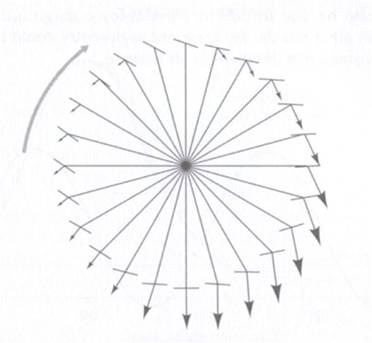
The diagram below shows a typical example of the direction and magnitude of force delivered during a pedal stroke.

The aim of the study is to evaluate the effectiveness of the power cranks in altering the above diagram with respect to the negative forces which are applicable to the pedal stroke. We are interested in proving that the deviation from the mean of the  Vector Forces in the pedal stroke will be dramatically reduced thus providing the rider with a smoother more efficient pedal stroke. An initial measurement of the athletes pedal stroke will be taken at the beginning of the study 1st September 2012 and then on a four weekly basis until 1st February 2013.

Study Supported by:

This Study is supported by http://www.powercranks.com as manufacturers of PowerCranks. PowerCranks will be supplying PowerCranks to the study for use in the study. PowerCranks will have no other input into this study as it is independent and transparent.

This Study is supported by http://www.trackcycling.ie by providing use of a wattbike for the purpose of ramp testing riders.

This study would not be possible without the help and support of our supporters and sportsexerciseengineering.com would like to thank all of its supporters for their support and assistance during this 6 month study.

Rolling Update:

3rd September 2012

  • The study has 8 subjects committed to ride PowerCranks (PC’s) and 8 subjects committed to ride ConnectedCranks (CC’s) for 6 hours minimum per week for six months
  • All subjects will provide Speed, Cadence and Heart Rate data for the 6 hours per week
  • Subjects will be baseline tested before study and every month for six months there after.
Posted in Reviews, Training | Tagged , , , , , , , , | Leave a comment

Cadence Economy and Effects of Different RPM’s

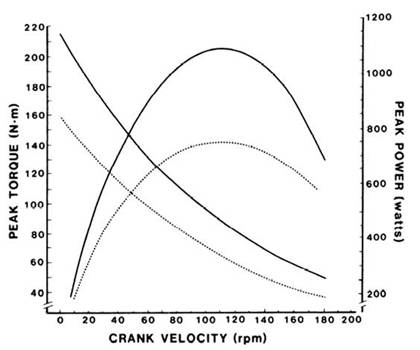
The Graph below shows the relationship between peak crank torque, crank velocity (i.e. cadence) and power output during short duration (<10s) maximal cycling in two separate subjects (solid and dashed lines). Figure used with permission from J Appl Physiol51


Based on the contractile properties of human muscle it has been shown that maximal cycling power output is achieved at approximately 120-130rpm (Figure 2; 8, 50, 51, 62, 78). Such high cadences may be important to maximal sprint cycling performance. Indeed, track and bicycle motorcross (BMX) cyclists typically perform short duration events (?m) at average cadences equal to or greater than 120 rpm 19, 20. However, Zoladz et al. 78 found that when pedalling above 100rpm there was a decrease in the power output delivered at any given oxygen cost, which was in turn associated with an earlier onset of anaerobiosis 77, 78. Such findings highlight the disadvantage of adopting such high cadences (>100rpm) during prolonged high-intensity exercise, such as competitive road cycling.

Posted in Reviews, Training | Tagged , , , , , , , , , | Leave a comment

Hypoxic Training Improves TT Performance and Power Output

Elite cyclists endurance performance following Intermittent Hypoxic Training (IHT)

THE EFFECTS OF INTERMITTENT HYPOXIC TRAINING ON AEROBIC CAPACITY AND ENDURANCE PERFORMANCE IN CYCLISTS

We welcome your opinion on all the papers we post. Add your comments, thoughts or your own articles below.

Summary of the paper:

Well controlled and applied endurance sport research. 20 male elite cyclists randomly divided into a hypoxic or normoxic group trained at 95% (hypoxic) or 100% (normoxic) of individual lactate threshold, 3 times a week for 3 weeks. After a rest week the hypoxic group managed a significantly improved 30km time trial with a 5.6% increased in average power and 2.6% improvement in time trial performance. The normoxic group did not see any significant differences post training.

The study highlights that haematological adaptations may not occur when only using IHT. However when combined with an adequate training stimulus muscular adaptation (increase mitochondrial density, cappilary length density) and gene expressions (upregulation of glycolytic pathway) adaptations could play important roles in the increase in endurance performance seen. Hoppeler and Vogt (2001) have previously shown that only intense exercise has resulted in muscular adaptation during an IHT period. This could be the reason a short 3 week study has shown significant gains.

Another interesting point would be that the hypoxic group actually worked at a slightly lower workload (in terms of Wattage on the bike) compared to the normoxic group. Buchheit et al (2012) shows that while perceived exertion may increase in hypoxia, physiological stress did not differ from normoxia (in high intensity interval work), allowing athletes to feel they have worked harder than normal with no detrimental increase in stress on the body.

Perhaps combining IHT alongside sleeping in hypoxia to ensure a significant dose is accumulated could lead to haematological improvements also. However training load must be carefully monitored to ensure adequate recovery occurs as previously mentioned this recovery may be key to endurance performance.

If a decreased work load can be used for similar if not greater gains in performance could this be due to an improved recovery?
• In terms of elite sport could this provide an edge psychologically as well as physically?

Information provided by: www.altitudecentre.com

Posted in Training | Tagged , , , , , , , , | 1 Comment

VO2 max may not be reached during a ramp test!

This is an interesting piece of research which really has implications on those of you using ramp tests for a parameter generating tool for zone calculation in your training program.

http://journals.lww.com/acsm-msse/Abstract/2012/08000/V_O2max_May_Not_Be_Reached_during_Exercise_to.16.aspx

Posted in Reviews, Training | Tagged , , , , , | Leave a comment

Brice Feilliu’s Power Profile for Stage 16

Bagnéres-de-Luchon 197km Stage 16

All the main climbed of the day are sectioned out on the graph to highlight the effort put in by Feilliu during this stage. The stage contained 2 HC Climbs & 2 Cat 1 Climbs. Feilliu burned over 6000 kilocals ( http://sportsexerciseengineering.com/2011/07/18/tour-de-france-nutrition/ ) during the stage for a total of 5hrs 46mins ride time for the stage. The bottom file is Feilliu’s attach on the Col du Tourmalet. 375 watts averaged in the final 7km of a HC climb that is 20km in length. His average cadence was 84rpm at 20kph.

(Click on Image to improve quality)

Posted in Reviews, Tour de France | Tagged , , , , , , , | Leave a comment