Vitamin D insufficiency/deficiency in Elite Irish Athletes (Research Paper)

Vitamin D Status and Supplementation in Elite Irish Athletes

AuthorsPamela J. Magee1, L. Kirsty Pourshahidi1, Julie M.W. Wallace1, John Cleary2, 3, Joe Conway4, Edward Harney5 and Sharon M. Madigan2, 3

Affiliations1Northern Ireland Centre for Food and Health, University of Ulster, Coleraine, Northern Ireland, 2High Performance Unit, National Boxing Stadium, Dublin,Ireland, 3Irish Institute of Sport, Sports Campus Ireland, Abbottstown, Dublin Ireland, 4Paralympics Ireland, Sport HQ, Clondalkin, Dublin 12 and 5Down County Board, Castlewellan, Northern Ireland.

Acceptance Date: March 12, 2013

ABSTRACT
Background 
A high prevalence of vitamin D insufficiency/deficiency is evident among athletes worldwide, which may impact on health and training ability. This observational study investigated the vitamin D status of elite Irish athletes and determined the effect of wintertime supplementation on status.

Methods Serum 25-hydroxyvitamin D (25(OH)D), calcium and plasma parathyroid hormone were analyzed in elite athletes (17 boxers, 33 paralympians and 34 Gaelic Athletic Association (GAA) players) in November 2010 (boxers and paralympians) or March 2011 (GAA players). A sub-set of boxers and paralympians (n=27) were supplemented with vitamin D3 during the winter months with either 5000 IU vitamin D3/d for 10-12 weeks or 50,000 IU on one or two occasions. Biochemical analysis was repeated following supplementation.

Results Median 25(OH)D of all athletes at baseline was 48.4 nmol/L. Vitamin D insufficiency/deficiency (serum 25(OH)D < 50 nmol/L) was particularly evident among GAA players (94%) due to month of sampling. Wintertime supplementation (all doses) significantly increased 25(OH)D (median 62.8 nmol/L at baseline vs. 71.1 nmol/L in April/May; p = 0.001) and corrected any insufficiencies/deficiencies in this sub-set of athletes. In contrast, 25(OH)D significantly decreased in those that did not receive a vitamin D supplement, with 74% of athletes classed as vitamin D insufficient/deficient after winter, compared to only 35% at baseline.

Conclusions This study has highlighted a high prevalence of vitamin D insufficiency/deficiency among elite Irish athletes and demonstrated that wintertime vitamin D3 supplementation is an appropriate regime to ensure vitamin D sufficiency in athletes during winter and early spring.

Link to paper: http://journals.humankinetics.com/ijsnem-in-press/ijsnem-in-press/vitamin-d-status-and-supplementation-in-elite-irish-athletes

Posted in Reviews | Tagged , , | Leave a comment

Preventing Cold Weather Injuries.

How to warm up and substantially reduce the risk of cold induced injuries.

With the recent cold weather snap and climate change  looking like its going to afford us a cold start to the racing season for the future it is very important to adopt a strategy for warming up prior to racing in order to reduce the risk of injury while competing.

I’m going to out line a protocol which riders can adopt. It may not suit every rider but can be used as a base for developing ones own protocol.

  1. Put plenty of cloths on and start by warming up on the Turbo. This will eliminate the wind chill factor and prevent your cold systems from being shocked. Build your warm up slowly over a 15 minute period to 70% Max Heart Rate.
  2. Come off the turbo and perform some stretching exercises which will stretch all muscle groups used for cycling. I have suggested some below.

Common stretches and yoga poses ideal for warm up

1: 1

Calf stretch into a wall

After a gentle warm-up, start the sequence with this stretch/yoga pose favoured by runners and used in numerous disciplines. Stand facing a wall with toes pointing forward. Place your hands flat against the wall at shoulder height. Bring one leg behind you (around half a metre) then place the foot flat on the floor (making sure your toes are still pointed straight forward).

Slowly lean forward over your front leg, but keep your back knee straight and your heel flat on the floor. You should feel this stretch in the big muscle of your calf (gastrocnemius). If you then bend your back knee slightly (keeping the foot flat on the floor) the stretch should be felt lower down your calf (soleus). Hold for at least 15 seconds. Switch legs and repeat.

2: 2

Downward facing dog (Adho Mukha Svanasana)

A great all-in-one that elongates and releases tension throughout the entire spinal column, opens the hips and stretches the back of the legs. If your hamstrings are particularly tight, step the feet wider apart in all variations and/or bend the knees slightly. The heels can also be placed against a wall. Begin on all fours with your hands slightly in front of the shoulders on the floor and toes tucked forwards.

On an exhalation, keeping your toes tucked under, lift your knees from the floor, straightening your legs and raising your bottom while moving onto the soles of your feet and working to press your heels into the floor. Push through the shoulders so the bottom is pushed back and the stretch can be felt through the back and hamstrings. Repeat a few times. Take at least five breaths.

3: 3

Expanded leg pose (Prasarita Padottanasana)

Begin with your feet very wide apart (the wider apart the feet, the easier it will be on the hamstrings). Placing your hands on your hips, inhale deeply and then bend forward on the exhale, bringing the torso only as far down as you can while maintaining a long spine. If your hamstrings are particularly tight, the knees can be bent slightly, releasing any tension in your back.

Variation A: Place your hands on a pile of books placed below shoulder level. Work towards eventually placing your hands in between the feet. Variation B: Interlace your fingers behind your back and fold your torso over, allowing the arms to come overhead. A belt held between your hands can be used if your shoulders and arms are initially too tight to yield.

4: 4

Quad stretch

This is one of many preparatory stretches for back-bends – the ultimate cycle posture reversal. This stretch focuses on the quadriceps and hip flexors and eventually the spine, as well as opening the chest and shoulder muscles. Start on all fours with the soles of your feet against a wall. Place a blanket underneath the knees if this is uncomfortable. Take your right knee off the floor and place it against the wall with your toes pointing upwards on the wall and your shin against the wall.

Slide your knee down towards the floor, making sure that the shin and knee are in contact with the wall at all times. Re-arrange the left leg so that the sole of the foot is now on the floor. The left shin and thigh should be making a 90-degree angle. Take at least five breaths. This is an intense stretch. Gradually take your hands off the floor and on an inhale, place your hands lightly on your left knee.

5: 5

Camel pose (Ustrasana)

This yoga pose opens the groin, thighs and entire back, as well as stretching the muscles in the chest, the front of the shoulders and back of the neck. With the soles of your feet against the wall and your toes tucked under, sit in a kneeling position. Slowly rise up off your heels, bringing the thighs and torso upright.

Inhale and gradually move your back into an arc on the exhale until the back of your head makes contact with the wall. Bring your hands towards your heels. If you can’t reach them, you can place a pile of thick books on either side of your shins and reach those. Take at least five breaths.

6: 6

Seated glute stretch and hip opener

This step in the sequence provides a deep stretch in the glutes and opens the hips. Sitting on a chair, have the sole of the right foot on the floor in line with the right knee. Place your left ankle on and just beyond the right knee. Keeping the spine as long as possible, inhale then fold at the hips on the exhale, bringing your torso over your left shin.

Take at least five breaths. As you relax into the stretch you may eventually be able to place both forearms on the legs. The right forearm rests on the inside of the left foot while the left forearm is placed at the front of the right knee (over the left foot).

7: 7

Revolved belly pose (Athara Parivartanasana)

This is a good stretch for those with particularly stiff backs. It releases tension in the spinal column, hips and shoulders and relieves discomfort in the lumbar spine. Lying on your back with your knees bent, bring them into your chest. Inhale and, with the next exhalation, roll your knees to the right side and rest them on a pillow.

Stretch both arms outwards along the floor to open the space between the shoulder blades then, as the lower back gradually releases, straighten the legs out slowly, aiming to eventually have your toes touch the hand nearest them.

8: 8

Supported bound angle pose (Salamba Supta Baddha Khonasana)

This yoga stretch helps alleviate most cyclists’ complaint zones. It’s a completely passive stretch and can be held for as long as you like and, best of all, it feels great. Sit on the floor directly in front of the end of a bolster (or a few folded blankets), and bring the soles of the feet together so that your legs form a diamond shape. Reclining on your elbows, lie back onto the bolster and stay like that for 5 minutes. This stretch releases tension in the diaphragm, chest and shoulders, and the groin and hips.

3. Once stretching has been complete its time for your balms and heat rubs. Get them on the legs and massage them in well concentrating on those areas where their is a tendency for injury. All athletes have different niggels so this massaging and application is individual to individual athletes. I you have a masseur/masseuse that you regularly visit maybe ask for some advise or instruction on what might be a good technique.

4. Now its time for another 10 minutes on the turbos. This is to get the systems back up to temperature and bring your heart rate up to 90% of max over the 10 minutes.

Screen Shot 2013-03-25 at 11.07.19

5. Finish with the turbo and get dressed for racing either put on or remove clothing as appropriate to you the individual. go out onto the road and do some short sprints start easy and building to full gas over a couple of minutes. Don’t forget neck warmers, gloves overshoes and multiple layers. It is always easy to remove a layer and throe it into the service car the it is to go looking for clothing once the race has started. If you are not comfortable changing clothing while riding your bike I suggest you find a quiet back road or industrial estate and practice taking your raincoat of gloves or overshoes on or off.

6. Head to start line and minimize amount of time hanging around before the start so as not to let the body cool down and tighten up. Note that it is important to “Hydrate when warming up and start your race eating” strategy.

Screen Shot 2013-03-25 at 11.13.30Article by Jonathan Gibson

Images Courtesy of Sticky Bottle & BikeRadar.


Posted in Training | Tagged , , , | Leave a comment

Effect of L-Carnitine Supplementation on Muscle and Blood Carnitine Content and Lactate Accumulation During High Intesity Sprint Cycling

This study examined the effects of 14 days of L-carnitine supplementation on muscle and blood carnitine fractions, and muscle and blood lactate concentrations, during high-intensity sprint cycling exercise. Eight subjects performed three experimental trials: control I (CON I, Day 0), control II (CON II, Day 14), and L-carnitine (L-CN, Day 28). Each trial consisted of a 4-min ride at 90% V02max, followed by a rest period of 20 min, and then five repeated l-min rides at 115% V02max (2 min rest between each). Following CON II, a11 subjects began dietary supplementation of L-carnitine for a period of 14 days (4 g/day). Plasma total acid soluble and free carnitine concentrations were significantly higher (p < .05) at all time points following supplementation. L-carnitine supplementation had no significant effect on muscle carnitine content and thus could not alter lactate accumulation during exercise

Posted in Reviews | Tagged , | Leave a comment

Methods to Standardize Dietary Intake Before Performance Testing

When preforming testing on Athletes dietary intake should be standardized for all testing to ensure continuity across testing. As from this study and others diet has shown to affect performance. If diet is affecting performance and testing protocol is not standardized results from test to test will not comparable and will result in the prescription of training zones and also the evaluation of performance improvements from test to test.

Introduction

When testing is undertaken to monitor an athlete’s progress toward competition goals or the effect of an intervention on athletic outcomes, sport scientists should aim to minimize extraneous variables that influence the reliability, sensitivity, or validity of performance measurement. Dietary preparation is known to influence metabolism and exercise performance. Few studies, however, systematically investigate the outcomes of pro- tocols that acutely control or standardize dietary intake in the hours and days before a performance trial. This review discusses the nutrients and dietary components that should be standardized before performance testing and reviews current approaches to achieving this. The replication of habitual diet or dietary practices, using tools such as food diaries or dietary recalls to aid compliance and monitoring, is a common strategy, and the use of education aids to help athletes achieve dietary targets offers a similarly low burden on the researcher. However, examination of dietary intake from real-life examples of these protocols reveals large variability between and within participants. Providing participants with prepackaged diets reduces this variability but can increase the burden on participants, as well as the researcher. Until studies can better quantify the effect of different protocols of dietary standardization on performance testing, sport scientists can only use a crude cost–benefit analysis to choose the protocols they implement. At the least, study reports should provide a more comprehensive description of the dietary-standardization protocols used in the research and the effect of these on the dietary intake of participants during the period of interest.

Conclusion

There are various levels of control or standardization of diet and nutritional preparation before a study or performance test. The unique characteristics of the individual study or test will determine the best approach to standardizing participants’ diet in the days before a performance trial. Researchers need to consider the advantages and disadvantages of each approach and match the level of dietary control required to maximize the findings with the logistics and resources of the study. However, given the potential impact that poor dietary control can have on the outcome of a study, more attention should be given to dietary standardization while planning and implementing the project. In addition, more details should be provided in research publications to describe how dietary standardization was undertaken and how well participants complied with protocols. Finally, measure- ment of the effect of dietary-standardization protocols on the reliability of metabolism and performance of various exercise protocols is an area of research that offers a wide range of possibilities with the potential for valuable insights. The outcomes could help us better understand the effects of nutrition on performance, as well as sharpen our ability to detect small but worthwhile differences in performance from a variety of other interventions.

Full Article: http://journals.humankinetics.com/ijsnem-back-issues/IJSNEMVolume20Issue2April/MethodstoStandardizeDietaryIntakeBeforePerformanceTesting

Posted in Reviews | Tagged , , , | Leave a comment

L-arginne Supplementation has no effect on exercise tolerance or O2 cost

No effect of acute L-arginine supplementation on O(2) cost or exercise tolerance.

Source

Sport and Health Sciences, College of Life and Environmental Sciences, University of Exeter, St. Luke’s Campus, Exeter, Devon, EX1 2LU, UK.

Abstract

The extent to which dietary supplementation with the nitric oxide synthase (NOS) substrate, L-arginine (ARG), impacts on NO production and NO-mediated physiological responses is controversial. This randomised, double blinded, cross-over study investigated the effects of acute ARG supplementation on NO biomarkers, O(2) cost of exercise and exercise tolerance in humans. In one experiment, 15 subjects completed moderate- and severe-intensity running bouts after acute supplementation with 6 g ARG or placebo (PLA). In another experiment, eight subjects completed moderate- and severe-intensity cycling bouts after acute supplementation with 6 g ARG plus 25 g of carbohydrate (ARG + CHO) or an energy-matched dose of carbohydrate alone (CHO). The plasma nitrite concentration was not different after ARG (Pre: 204 ± 79; Post: 241 ± 114 nM; P > 0.05) or ARG + CHO consumption (Pre: 304 ± 57; Post: 335 ± 116 nM; P > 0.05). During moderate-intensity exercise, the steady-state pulmonary [Formula: see text] was not different, relative to the respective placebo conditions, after ARG (PLA: 2,407 ± 318, ARG: 2,422 ± 333 mL min(-1)) or ARG + CHO (CHO: 1,695 ± 304, ARG + CHO: 1,712 ± 312 mL min(-1)) ingestion (P > 0.05). The tolerable duration of severe exercise was also not significantly different (P > 0.05) after ingesting ARG (PLA: 551 ± 140, ARG: 552 ± 150 s) or ARG + CHO (CHO: 457 ± 182, ARG + CHO: 441 ± 221 s). In conclusion, acute dietary supplementation with ARG or ARG + CHO did not alter biomarkers of NO synthesis, O(2) cost of exercise or exercise tolerance in healthy subjects.

Posted in Reviews | Tagged , , | Leave a comment

Sports Nutrition for Endurance Athletes, 3rd Edition Review.

The 3rd edition of the Sports Nutrition for Endurance Athletes is written by Monique Ryan a world renowned nutritionist. Monique Ryan MS RD CSSD LDN has over 30 years experience in the world of performance sports nutrition. She is also the founder of Sports Nutrition Designs a Chicago based business.

Sports Nutrition for Endurance Athletes


Book Layout:

Part I

Your Daily Performance Diet

Optimal Nutrition for Training and Health

  1. Daily Hydration Essential. Drinking it In
  2. Energy Nutrients for Optimal Health and Performance: Build a Solid   Nutrition Base
  3. Vitamins, Minerals and Electrolytes: The Nuts Bolts and Spark Plugs of Your Diet

Part II

Your Training Diet

Fine Tuning your Diet for Top Performance

  1. Your Daily Training Diet: Eating for Optimal Recovery
  2. Food an Fluid Intake for Training and Competition: Timing is Everything
  3. Weight Loss, Muscle Building an Changing Body Composition: Boosting Your Strength to Weight Ratio
  4. Ergogenic Aids: Separating Fact and Fiction

Part III

Your Sports-Specific Nutritional Guidelines

Putting Your Sports Plan Into Action

  1. Nutrition for Triathletes (and other Multisport Events)
  2. Nutrition for Cycling (Road Cycling, Mountain Biking, Track Cycling and Cyclocross)
  3. Nutrition for Distance Running
  4. Nutrition for Swimming

Part IV

Special Nutritional Considerations

Meeting and Managing Your Challenges

  1. The Athlete with Unique Nutritional Considerations
  2. Performance Boosts and Problem Solving with Nutrition
  3. Nutritional Strategies for Extreme Environments

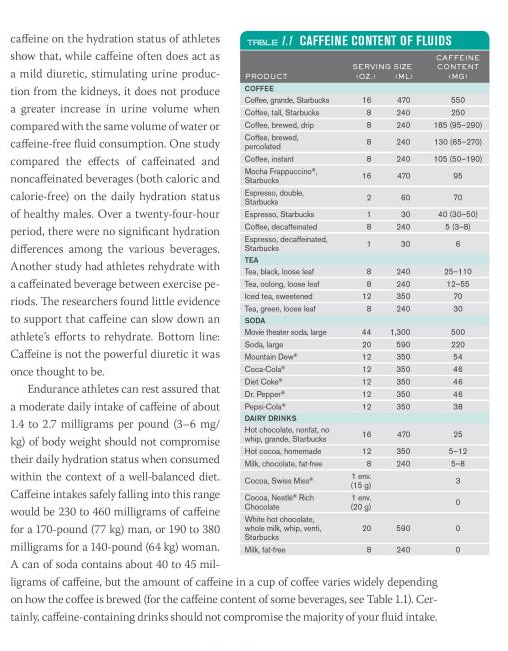
Part I of the book introduces the reader to some valuable information. This is required to easily continue and understand the rest of the book. `the book contain quite a amount of information. A considerable amount of the information is quite detailed and does require a lot of attention during reading

The book tends to duplicate some of its information while discussing the various different endurance sports such as running, cycling, swimming and triathlon. It will also answer almost any questions you may have regarding your diet and hydration throughout a full training cycle and racing period. The book also discusses subjects from “The Body’s Energy Systems” to “Nutrition to Beat Illness”.

Screen Shot 2013-03-18 at 11.59.07

Sample meal plans are presented in the back of the book along with some case notes and a worksheet for calculating or should I say estimating one sweat loss post exercise/training. Also supplied is a spreadsheet of sports nutrition products. They are all detailed and compared making it easy for one to select which might be more beneficial for a particular event. Other chart and Spreadsheets include

  • Glossary of Vitamins and Minerals and there functions
  • Glycemic Index of Foods
  • Long Distance Race Nutrition Planner
  • Sprint and Olympic Race Nutrition Planner
  • Summary of Ergogenic Aids
  • Many More

Sports Nutrition for Endurance Athletes will cover 99% of your questions and will be well used after reading for further reference.


Posted in Reviews | Tagged , , , , | Leave a comment

Deep Nutrition by Catherine Shanahan MD & Luke Shanahan MFA

Catherine Shanahan MD trained at Cornell Universitys Molecular Biology program where she learned how nutrients direct physiologic growth. She has continued to study nutrition and alternative medicine since residency training in Tuscan, Arizona. Dr. Shannahan’s lectures have revolutionized how fellow medical professionals think about nutrition and health. Her philosophies are based around two view

  1. Paying attention to source. This includes the quality of the soil and the health of the lake/oceans etc, as well as seasonality.
  2. Paying attention to the culinary practices handed down over generations that enabled people to maximize the resources of their region

deep nutrition

She is a supporter of eating to support and improve your genes. This lifestyle can be seen through Common External Signs of Genetic Wealth (Men and Women) such as

  • Strong joints
  • Fertility
  • No grey hair by age 50
  • Strong nails
  • Limbs proportioned according to the Golden Ratio
  • Long nose, high cheekbones, full lips, and strong jaw


Luke Shanahan MFA studied enology and the culinary arts during and since graduating school. He has taught, lectured and worked with chiefs around the country, and is

Deep Nutrition identifies the foods and techniques common to every culture and divides them into four categories, called the Four Pillars of World Cuisine. From the Maasai and ancient Egyptian to the Japanese and the French, you’ll learn how the same Four Pillars form the foundation of all the healthiest diets. Using the latest research in physiology and genetics, the authors explain why your family’s health depends on eating these foods. In a world of competing nutritional ideologies, Deep Nutrition gives us the full picture, empowering us to take control of our destiny in ways we might never have imagined.

The book will show how your genes are alway changing and how food can impact on this system of evolution. For instance a group of researchers remover Vitamin A from the diet of pigs and then bread them producing a blind piglet. As we know Vitamin A is and essential part of sight. Following this outcome the researchers then reintroduced Vitamin A back into the pigs diet and again bred them producing a piglet with perfect eyesight. The results of this study suggesting that genes can be switched on and off or alter through dietary restrictions. Through reading the Deep Nutrition you will educate yourself on the following

  • Your genes are always changing
  • Traditional food creates beautiful bodies
  • Beauty and health are connected
  • We instinctively recognize the healthiest mates
  • To see beyond calories and learn the language of food
  • To lose weight and stay young
  • To prevent cancer, heart disease, Alzheimers and more
  • To use diet to turn your child’s behavior around
  • To prepare the foods that have stood the test of time
  • Symmetry and health are connected
  • The cholesterol theory of heart disease created a sickness epidemic!

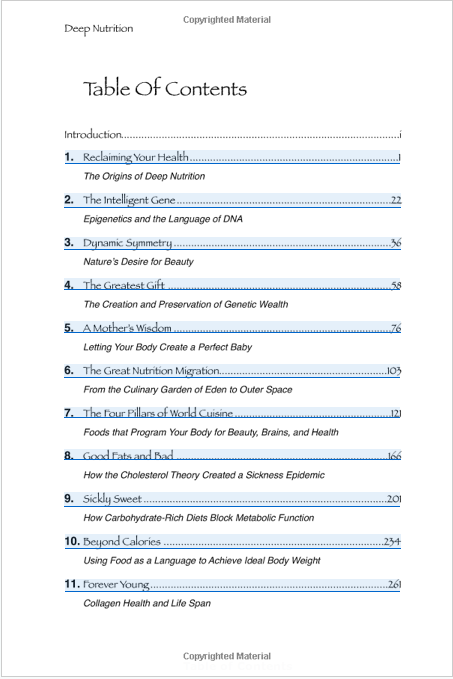
The Table of Contents for the book are as follows

Deep Nutrition Contents

For this of you interest in an alternative view to you dietary needs and who have an interest in evolution and how foods have the human race have been evolving this is a good book. It is also excellent in its description of foods and foods abilities to effect the human body. Athletes should read this book and determine which foods  and dietary structure most suit them. Ancient history didn’t have gels and but yet man had to be fit and strong to provide hunted food for the family. It is also worth nothing that the spreadable paste in your tub of butter is only one molecule away from being that tub. Deep Nutrition is well structured takes the reader though a journey of evolution with food and also has a section devotes to pregnancy which is quite enlightening. This book will change your view and appreciation of you diet and they way you view your food. We recommend this book to athletes and non-athletes alike.

Posted in Reviews | Tagged , , , | Leave a comment

Cooling Glove is better than steroids….so they say at Stanford University.

Stanford researchers’ cooling glove ‘better than steroids’ – and helps solve physiological mystery, too

The temperature-regulation research of Stanford biologists H. Craig Heller and Dennis Grahn has led to a device that rapidly cools body temperature, greatly improves exercise recovery, and could help explain why muscles get tired.

Video link HERE
The rapid thermal exchange device, nicknamed ‘the glove,’ creates a vacuum to draw blood to the surface of the palms. Cold circulating water cools the blood, which returns to the heart and rapidly lowers the body’s core temperature.

“Equal to or substantially better than steroids … and it’s not illegal.”

This is the sort of claim you see in spam email subject lines, not in discussions of mammalian thermoregulation. Even the man making the statement, Stanford biology researcher Dennis Grahn, seems bemused. “We really stumbled on this by accident,” he said. “We wanted to get a model for studying heat dissipation.”

But for more than a decade now, Grahn and biology Professor H. Craig Heller have been pursuing a serendipitous find: by taking advantage of specialized heat-transfer veins in the palms of hands, they can rapidly cool athletes’ core temperatures – and dramatically improve exercise recovery and performance.

The team is finally nearing a commercial version of their specialized heat extraction device, known as “the glove,” and they’ve seen their share of media coverage. But what hasn’t been discussed is why the glove works the way it does, and what that tells us about why our muscles become fatigued.

Nature’s radiator

For Heller and Grahn, the story starts, improbably, with a longstanding question about bears.

Black bears are extremely well-insulated animals, equipped with a heavy coat of fur and a thick layer of subcutaneous fat that help them maintain their body temperature as they hibernate through winter. But once spring arrives and temperatures rise, these same bears face a greater risk of overheating than of hypothermia. How do they dump heat without changing insulation layers?

Heller and Grahn discovered that bears and, in fact, nearly all mammals have built-in radiators: hairless areas of the body that feature extensive networks of veins very close to the surface of the skin.

Rabbits have them in their ears, rats have them in their tails, dogs have them in their tongues. Heat transfer with the environment overwhelmingly occurs on these relatively small patches of skin. When you look at a thermal scan of a bear, the animal is mostly indistinguishable from the background. But the pads of the bear’s feet and the tip of the nose look like they’re on fire.

These networks of veins, known as AVAs (arteriovenous anastomoses) seem exclusively devoted to rapid temperature management. They don’t supply nutrition to the skin, and they have highly variable blood flow, ranging from negligible in cold weather to as much as 60 percent of total cardiac output during hot weather or exercise.

Coolers and vacuums

In humans, AVAs show up in several places, including the face and feet, but the researchers’ glove targets our most prominent radiator structures – in the palms of our hands.

The newest version of the device is a rigid plastic mitt, attached by a hose to what looks like a portable cooler. When Grahn sticks his hand in the airtight glove, the device creates a slight vacuum. The veins in the palm expand, drawing blood into the AVAs, where it is rapidly cooled by water circulating through the glove’s plastic lining.

The method is more convenient than, say, full-body submersion in ice water, and avoids the pitfalls of other rapid palm-cooling strategies. Because blood flow to the AVAs can be nearly shut off in cold weather, making the hand too cold will have almost no effect on core temperature. Cooling, Grahn says, is therefore a delicate balance.

“You have to stay above the local vasoconstriction threshold,” said Grahn. “And what do you get if you go under? You get a cold hand.”

Even in prototype form, the researchers’ device proved enormously efficient at altering body temperature. The glove’s early successes were actually in increasing the core temperature of surgery patients recovering from anesthesia.

“We built a silly device, took it over to the recovery room and, lo and behold, it worked beyond our wildest imaginations,” Heller explained. “Whereas it was taking them hours to re-warm patients coming into the recovery room, we were doing it in eight, nine minutes.”

But the glove’s effects on athletic performance didn’t become apparent until the researchers began using the glove to cool a member of the lab – the confessed “gym rat” and frequent coauthor Vinh Cao – between sets of pull-ups. The glove seemed to nearly erase his muscle fatigue; after multiple rounds, cooling allowed him to do just as many pull-ups as he did the first time around. So the researchers started cooling him after every other set of pull-ups.

“Then in the next six weeks he went from doing 180 pull-ups total to over 620,” said Heller. “That was a rate of physical performance improvement that was just unprecedented.”

The researchers applied the cooling method to other types of exercise – bench press, running, cycling. In every case, rates of gain in recovery were dramatic, without any evidence of the body being damaged by overwork – hence the “better than steroids” claim. Versions of the glove have since been adopted by the Stanford football and track and field teams, as well as other college athletics programs, the San Francisco 49ers, the Oakland Raiders and Manchester United soccer club.

The elegant muscle

But what does overheating have to do with fatigue in the first place?

Much of the lab’s recent research can be summed up with Grahn’s statement that “temperature is a primary limiting factor for performance.” But the researchers were at a loss to understand why until recently.

In 2009, it was discovered that muscle pyruvate kinase, or MPK, an enzyme that muscles need in order to generate chemical energy, was highly temperature- sensitive. At normal body temperature, the enzyme is active – but as temperatures rise, some of the enzyme begins to deform into the inactive state. By the time muscle temperatures near 104 degrees Fahrenheit, MPK activity completely shuts down.

There’s a very good biological reason for this shutdown. As a muscle cell increases its activity, it heats up. But if this process continues for too long, the cell will self-destruct. By shutting itself down below a critical temperature threshold, MPK serves as an elegant self-regulation system for the muscle.

“Your muscle cells are saying, “You can’t work that hard anymore, because if you do you’re going to cook and die,'” Grahn said.

When you cool the muscle cell, you return the enzyme to the active state, essentially resetting the muscle’s state of fatigue.

The version of the device that will be made available commercially is still being tweaked, but the researchers see applications for heat extraction in areas more important than a simple performance boost. Hyperthermia and heat stress don’t just lead to fatigue – they can become medical emergencies.

“And every year we hear stories about high school athletes beginning football practice in August in hot places in the country, and there are deaths due to hyperthermia,” said Heller. “There’s no reason why that should occur.”

Craig Heller and Dennis Grahn have personal financial interests in the company that is developing the cooling glove as a commercial product.

Article Courtesy of Max McClure

Posted in Reviews | Tagged | Leave a comment

Gene Discovery Reveals Importance of Eating Your Greens

Eating your greens may be even more important that previously thought, with the discovery that an immune cell population essential for intestinal health could be controlled by leafy greens in your diet

The immune cells, named innate lymphoid cells (ILCs), are found in the lining of the digestive system and protect the body from ‘bad’ bacteria in the intestine. They are also believed to play an important role in controlling food allergies, inflammatory diseases and obesity, and may even prevent the development of bowel cancers.

Dr Gabrielle Belz, Ms Lucie Rankin, Dr Joanna Groom and colleagues from the Walter and Eliza Hall Institute’s Molecular Immunology division have discovered the gene T-bet is essential for producing a population of these critical immune cells and that the gene responds to signals in the food we eat.

Dr Belz said the research team revealed T-bet was essential for generating a subset of ILCs which is a newly discovered cell type that protects the body against infections entering through the digestive system. “In this study, we discovered that T-bet is the key gene that instructs precursor cells to develop into ILCs, which it does in response to signals in the food we eat and to bacteria in the gut,” Dr Belz said. “ILCs are essential for immune surveillance of the digestive system and this is the first time that we have identified a gene responsible for the production of ILCs.”

The research was published today in the journal Nature Immunology.

Dr Belz said that the proteins in green leafy (cruciferous) vegetables are known to interact with a cell surface receptor that switches on T-bet, and might play a role in producing these critical immune cells. “Proteins in these leafy greens could be part of the same signalling pathway that is used by T-bet to produce ILCs,” Dr Belz said. “We are very interested in looking at how the products of these vegetables are able to talk to T-bet to make ILCs, which will give us more insight into how the food we eat influences our immune system and gut bacteria.”

ILCs are essential for maintaining the delicate balance between tolerance, immunity and inflammation. Ms Rankin said the discovery had given the research team further insight into external factors responsible for ILC activation. “Until recently, it has been difficult to isolate or produce ILCs,” Ms Rankin said. “So we are very excited about the prospect for future research on these cells which are still poorly understood.”

ILCs produce a hormone called interleukin-22 (IL-22), which can protect the body from invading bacteria, Dr Belz said. “Our research shows that, without the gene T-bet, the body is more susceptible to bacterial infections that enter through the digestive system. This suggests that boosting ILCs in the gut may aid in the treatment of these bacterial infections,” she said.

ILCs help to maintain a ‘healthy’ environment in the intestine by promoting good bacteria and healing small wounds and abrasions that are common in the tissues of the gut. They may also have a role in resolving cancerous lesions. “The discovery of these immune cells has thrown open a completely new way of looking at gut biology,” Dr Belz said. “We are just starting to understand how important these immune cells are in regulating allergy and inflammation, and the implications for bowel cancer and other gastrointestinal disorders such as Crohn’s disease,” she said.

“Understanding the biology of ILCs and the genes that are essential for generating them will help us to develop methods of targeting these cells,” Dr Belz said. “This might include boosting ILCs in situations where they may not be active enough, such as infections or some cancers, or depleting them in situations where they are overactive, such as chronic inflammatory disease,” she said.

This project was supported by the National Health and Medical Research Council of Australia, the Sylvia and Charles Viertel Foundation, the Howard Hughes Medical Institute and the Victorian Government.

Article Courtesy of http://www.sciencedaily.com

Posted in Reviews | Leave a comment

Physiological variables at lactate threshold under-represent cycling time-trial intensity.

Abstract

BACKGROUND:

The importance of lactate threshold (LT) as a determinant of performance in endurance sports has been established. In addition, it has been shown that during running and selected other endurance competitions, athletes perform at a velocity and VO2 slightly above LT for the duration of the event. Prior work indicates however, that this may not be true during a cycling time-trial (TT). This investigation sought to compare physiological variables during a 20-k TT with those corresponding to the athlete’s LT.

METHODS:

Thirteen male cyclists (22.7+/-0.8 yrs; 180.6+/-8.0 cm; 77.1+/-10.0 kg; 8.3+/-2.5% fat; 4.9+/-2.2 l x min(-1), VO2max) participated in the study. Subjects performed a graded protocol starting at 150 Watts (W) to determine LT (2 mmol x L(-1) above baseline) which consisted of 20 W increases every 4-min. Following an 8 min-recovery, subjects cycled at the wattage corresponding to LT-20 W for 1 min and then workload increased 20 W every minute until volitional exhaustion to determine VO2max x On a separate occasion a self-paced, 20-k TT was completed.
RESULTS:

Mean values of blood lactate, HR and % HRmax, VO2 and % VO2max, and power output throughout the 20-k TT were greater (p<0.01) than those at LT. During the TT these cyclists performed at an intensity well above LT (blood lactate=252.0+/-0.1%, HR=9.4+/-0.03%, %HRmax=9.2+/-0.15%, VO2=26.5+/-0.7%, %VO2max=17.2+/-0.08% and power out-put=14.8+/-0.14% above LT) for over 30 min.

CONCLUSIONS:

Therefore, while LT may be highly correlated to performance, it may not be representative of race pace for a cycling TT, and may be questionable as a benchmark used to prescribe training intensity for competitive TT-cycling.

Posted in Reviews, Training | Tagged , , , , | Leave a comment