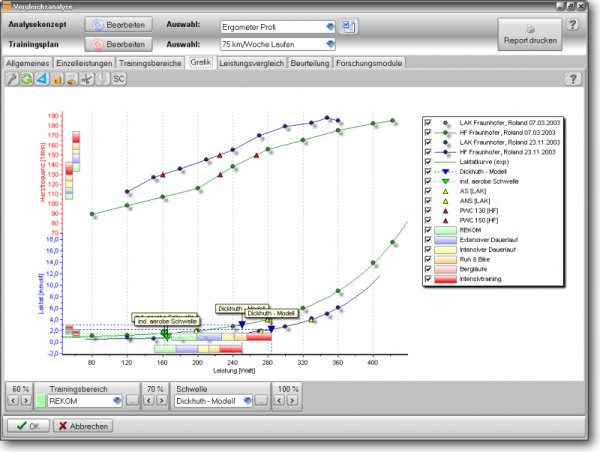
Lactate Profile and how to Read it!

Having your Lactate Tested is good but if you don’t have the results profiled correctly their a waste of time.

During the last nearly 50 years, the blood lactate curve and lactate thresholds (LTs) have become important in the diagnosis of endurance performance. An intense and ongoing debate emerged, which was mainly based on terminology and/or the physiological background of LT concepts. The present review aims at evaluating LTs with regard to their validity in assessing endurance capacity. Additionally, LT concepts shall be integrated within the ‘aerobic-anaerobic transition’ – a framework which has often been used for performance diagnosis and intensity prescriptions in endurance sports. Usually, graded incremental exercise tests, eliciting an exponential rise in blood lactate concentrations (bLa), are used to arrive at lactate curves. A shift of such lactate curves indicates changes in endurance capacity. This very global approach, however, is hindered by several factors that may influence overall lactate levels. In addition, the exclusive use of the entire curve leads to some uncertainty as to the magnitude of endurance gains, which cannot be precisely estimated. This deficiency might be eliminated by the use of LTs. The aerobic-anaerobic transition may serve as a basis for individually assessing endurance performance as well as for prescribing intensities in endurance training. Additionally, several LT approaches may be integrated in this framework. This model consists of two typical breakpoints that are passed during incremental exercise: the intensity at which bLa begin to rise above baseline levels and the highest intensity at which lactate production and elimination are in equilibrium (maximal lactate steady state [MLSS]). Within this review, LTs are considered valid performance indicators when there are strong linear correlations with (simulated) endurance performance. In addition, a close relationship between LT and MLSS indicates validity regarding the prescription of training intensities. A total of 25 different LT concepts were located. All concepts were divided into three categories. Several authors use fixed bLa during incremental exercise to assess endurance performance (category 1). Other LT concepts aim at detecting the first rise in bLa above baseline levels (category 2). The third category consists of threshold concepts that aim at detecting either the MLSS or a rapid/distinct change in the inclination of the blood lactate curve (category 3). Thirty-two studies evaluated the relationship of LTs with performance in (partly simulated) endurance events. The overwhelming majority of those studies reported strong linear correlations, particularly for running events, suggesting a high percentage of common variance between LT and endurance performance. In addition, there is evidence that some LTs can estimate the MLSS. However, from a practical and statistical point of view it would be of interest to know the variability of individual differences between the respectivethreshold and the MLSS, which is rarely reported. Although there has been frequent and controversial debate on the LT phenomenon during the last three decades, many scientific studies have dealt with LT concepts, their value in assessing endurance performance or in prescribing exercise intensities in endurance training. The presented framework may help to clarify some aspects of the controversy and may give a rationale for performance diagnosis and training prescription in future research as well as in sports practice.

Click on the Image to go to our Elite Performance Coaching Page or contact us HERE for evaluating or determining your Lactate Profile.

WWW.SEEng.ie Lactate & Training Zone Analysis Printout

WWW.SEEng.ie Lactate & Training Zone Analysis Printout

Posted in Reviews, Training | Tagged , , , | Leave a comment

Stay away from the Vegetable Oil

Primary Prevention of Cardiovascular Disease with a Mediterranean Diet

DISCUSSION

In this trial, an energy-unrestricted Mediterranean diet supplemented with either extra-virgin olive oil or nuts resulted in an absolute risk reduction of approximately 3 major cardiovascular events per 1000 person-years, for a relative risk reduction of approximately 30%, among high-risk persons who were initially free of cardiovascular disease. These results support the benefits of the Mediterranean diet for cardiovascular risk reduction. They are particularly relevant given the challenges of achieving and maintaining weight loss. The secondary prevention Lyon Diet Heart Study also showed a large reduction in rates of coronary heart disease events with a modified Mediterranean diet enriched with alpha-linolenic acid (a key constituent of walnuts). That result, however, was based on only a few major events.

There were small between-group differences in some baseline characteristics in our trial, which were not clinically meaningful but were statistically significant, and we therefore adjusted for these variables. In fully adjusted analyses, we found significant results for the combined cardiovascular end point and for stroke, but not for myocardial infarction alone. This could be due to stronger effects on specific risk factors for stroke but also to a lower statistical power to identify effects on myocardial infarction. Our findings are consistent with those of prior observational studies of the cardiovascular protective effects of the Mediterranean diet, olive oil, and nuts; smaller trials assessing effects on traditional cardiovascular risk factors and novel risk factors, such as markers of oxidation, inflammation, and endothelial dysfunction; and studies of conditions associated with high cardiovascular risk — namely, the metabolic syndrome and diabetes. Thus, a causal role of the Mediterranean diet in cardiovascular prevention has high biologic plausibility. The results of our trial might explain, in part, the lower cardiovascular mortality in Mediterranean countries than in northern European countries or the United States.

The risk of stroke was reduced significantly in the two Mediterranean-diet groups. This is consistent with epidemiologic studies that showed an inverse association between the Mediterranean diet or olive-oil consumption and incident stroke.

Our results compare favorably with those of the Women’s Health Initiative Dietary Modification Trial, wherein a low-fat dietary approach resulted in no cardiovascular benefit. Salient components of the Mediterranean diet reportedly associated with better survival include moderate consumption of ethanol (mostly from wine), low consumption of meat and meat products, and high consumption of vegetables, fruits, nuts, legumes, fish, and olive oil. Perhaps there is a synergy among the nutrient-rich foods included in the Mediterranean diet that fosters favorable changes in intermediate pathways of cardiometabolic risk, such as blood lipids, insulin sensitivity, resistance to oxidation, inflammation, and vasoreactivity.

Our study has several limitations. First, the protocol for the control group was changed halfway through the trial. The lower intensity of dietary intervention for the control group during the first few years might have caused a bias toward a benefit in the two Mediterranean-diet groups, since the participants in these two groups received a more intensive intervention during that time. However, we found no significant interaction between the period of trial enrollment (before vs. after the protocol change) and the benefit in the Mediterranean-diet groups. Second, we had losses to follow-up, predominantly in the control group, but the participants who dropped out had a worse cardiovascular risk profile at baseline than those who remained in the study, suggesting a bias toward a benefit in the control group. Third, the generalizability of our findings is limited because all the study participants lived in a Mediterranean country and were at high cardiovascular risk; whether the results can be generalized to persons at lower risk or to other settings requires further research.

As with many clinical trials, the observed rates of cardiovascular events were lower than anticipated, with reduced statistical power to separately assess components of the primary end point. However, favorable trends were seen for both stroke and myocardial infarction. We acknowledge that, even though participants in the control group received advice to reduce fat intake, changes in total fat were small and the largest differences at the end of the trial were in the distribution of fat subtypes. The interventions were intended to improve the overall dietary pattern, but the major between-group differences involved the supplemental items. Thus, extra-virgin olive oil and nuts were probably responsible for most of the observed benefits of the Mediterranean diets. Differences were also observed for fish and legumes but not for other food groups. The small between-group differences in the diets during the trial are probably due to the facts that for most trial participants the baseline diet was similar to the trial Mediterranean diet and that the control group was given recommendations for a healthy diet, suggesting a potentially greater benefit of the Mediterranean diet as compared with Western diets.

In conclusion, in this primary prevention trial, we observed that an energy-unrestricted Mediterranean diet, supplemented with extra-virgin olive oil or nuts, resulted in a substantial reduction in the risk of major cardiovascular events among high-risk persons. The results support the benefits of the Mediterranean diet for the primary prevention of cardiovascular disease.

Original Article:

http://www.nejm.org/doi/full/10.1056/NEJMoa1200303#t=articleMethods

Posted in Reviews | Tagged | Leave a comment

IS THE CRITICAL RUNNING SPEED RELATED TO THE INTERMITTENT MAXIMAL LACTATE STEADY STATE?

ABSTRACT

The purpose of the present study was to compare the critical speed (CS) with the speed at the maximal lactate steady state (vMLSS) determined by a continuous and an intermittent model in trained runners. Eight male endurance runners (30.3 ± 10.6 years; 65.0 ± 8.5 kg; 1.73 ± 0.6 m; 11.3 ± 4.0% body fat) volunteered for this investigation and performed an incremental treadmill test, as well as 2-5 30-min constant speed tests to determine the MLSS continuous and MLSS intermittent (5 min of running, interspaced by 1 min of passive rest). The CS was determined by 2 maximal running efforts of 1500 and 3000 m performed on a 400 m running track. The CS was calculated as the slope of the linear regression of distance versus time. Statistical analysis revealed no significant difference between CS and MLSS determined by intermittent running (15.2 ± 1.0 km·h-1 vs. 15.3 ± 0.7 km·h-1, respectively), however, both were significantly higher than continuous MLSS (14.4 ± 0.6 km·h-1). There was also a significant correlation between CS and MLSS intermittent (r = 0.84, p = 0.008). On the basis of the present results, we conclude that for practical reasons (low cost, non-invasive) the CS is an interesting and alternative method to prescribe endurance interval training at maximal lactate steady state intensity, in preference to a continuous protocol.

INTRODUCTION

The maximal lactate steady state velocity or speed (vMLSS) can be defined as the highest running velocity at which blood lactate concentration ([La]) remains stable during the last 20 min of constant load exercise (Beneke, 1995; Weltman, 1995). Indeed, the vMLSS has been considered the boundary between heavy and severe intensity domains (Pringle and Jones, 2002) and also the upper limit of stability in metabolic responses and pulmonary gas exchange. Besides, it is frequently used for the prescription of aerobic training, especially for endurance athletes (Beneke, 1995; Beneke et al., 2001; Billat et al., 2004; Jones and Doust, 1998; Philp et al., 2008).

It is important to highlight that vMLSS is usually determined by continuous, long duration protocols. Nevertheless, the prescription of aerobic training in many sports is also conducted intermittently, thus it is necessary to make adjustments in training intensity. Interval training (IT) has been frequently used by endurance athletes (swimmers, cyclists, rowers, runners, and triathletes) as a strategy to increase training intensity (Billat, 2001; Billat et al., 2004; Philp et al., 2008; Seiler and Hetlelid, 2005). Intermittent exercise is the basis of IT and involves repeated bouts of high intensity (equal to or greater than vMLSS) interspersed with periods of recovery (passive or active), which allow proportionally greater durations than do activities at the same absolute load or similar durations with higher loads (Beneke et al., 2003; Billat et al., 2003).

Thus, considering the importance of intermittent training to endurance sports it is necessary that the vMLSS also be determined using this model in order to increase the specificity of IT. According to this, Beneke et al., 2003 found that the work load at MLSS determined in an intermittent protocol (vMLSSint) was approximately 9% higher than that determined during a continuous protocol (vMLSScon). This study highlighted the importance of knowledge of the physiological responses during intermittent exercise for the evaluation and prescription of aerobic training at vMLSS.

Moreover the vMLSS, the critical velocity or speed (CS) has also been used to evaluate aerobic fitness and also to prescribe endurance training intensity (Poole et al., 1990; Denadai et al., 2003). A running CS was first described by Hughson et al. (1984) as an adaptation of the critical power concept developed by Monod and Scherer (1965). In this model, initially proposed for the cycle ergometer, the asymptote of the nonlinear relationship between power vs. time to exhaustion, was named ‘critical power’. Later, this concept was applied in a different way to other sports such as swimming (Wakayoshi et al.,1993), track running (Kranenburg and Smith, 1996) and track cycling (De Lucas et al.,2002) assuming a linear relationship between distance and time. Although Wakaoyshi et al. (1993) applied the critical power concept in field tests and suggested that the CS corresponded to the anaerobic threshold intensity to this sport, numerous studies have shown that this index overestimates the actual vMLSScon in swimming (Dekerle et al.,20052010), cycling (De Lucas et al., 2002; Brickley et al., 2002; Dekerle et al., 2003) and running (Smith and Jones, 2001; Denadai et al., 2005). On the other hand, Dekerle et al.,2010 showed stability of [La] over 50 min duration in IT sets (10 x 400 m with 50 s pauses), suggesting that CS may represent an intensity similar to vMLSSint. However, up to this date, no study has attempted to compare the CS with a direct method of determination of vMLSS in an intermittent model. Thus, we hypothesized a significant relationship between CS and the vMLSSint in a group of trained runners.

Hence, the main aim of the present study was to compare the CS with the speed at MLSS determined during a continuous versus intermittent model in trained runners.

 METHODS

SUBJECTS

Eight male endurance trained runners, with at least 3 years of national experience volunteered in the present study (30.3 ± 10.6 years; 65.0 ± 8.5 kg; 1.73 ± 0.06 m; 11.3 ± 4.0% body fat). Preceding the period of the study, the athletes had a weekly training volume of 40 km. All of the tested athletes were familiarized with the experimental procedures.

Besides, prior to any testing all participants was familiarized with the experimental procedures and gave written informed consent as well as being informed of the associated risks and benefits of participation. The research project was approved by the Ethics Committee for Scientific Research at the Federal University of Santa Catarina (protocol 222/2008).

EXPERIMENTAL DESIGN

In order to avoid undue fatigue before testing, subjects were instructed to avoid heavy training during the preceding 24 hours. Athletes were advised to maintain a regular diet during the day before testing and to refrain from smoking and caffeinated drinks during the two hours preceding testing. All tests were performed over a three week period and all tests were performed at the same hour of the day (i.e. 9-11 am) in order to avoid circadian variation in performance output (Carter et al., 2002).

Firstly were performed anthropometric measures (body mass, stature, and skinfold measures to estimate percent body fat) followed by an intermittent treadmill test for the assessment of maximal oxygen uptake (VO2max), velocity at maximal oxygen uptake (vVO2max), maximal ventilation (VEmax), maximal heart rate (HRmax) and onset of blood lactate accumulation (OBLA). Based on the determination of OBLA, on different days, three to five submaximal tests were performed to determine the speed at maximal lactate steady state using both a continuous (vMLSScon) and an intermittent protocol (vMLSSint).

Following the determination of the vMLSS in both models two field performances at 1500 m and 3000 m were performed on different days.

ANTHROPOMENTRIC PROTOCOL

Body mass (kg) was measured to the nearest 0.1 kg using a calibrated balance (Soehnle, Germany) and body height was measured to the nearest 0.1 cm (Sanny, EUA). Body fat mass was assessed by the measurements of seven skinfold (chest, mid-axillary, supra-iliac, abdomen, triceps, sub-scapular and thigh) with a scientific adipometer accurate to 1mm (CESCORF, Porto Alegre, Brazil). Body density was estimated from a specific equation to male athletes proposed by Jackson and Pollock (1978), and the value was applied to estimate body fat by the Siri, 1956 equation.

MEASUREMENT OF VO2max,vVo2max, VEMAX, HRMAX AND OBLA

An intermittent treadmill exercise test was performed on a motorized treadmill (Imbramed Millenium Super, Brazil). The treadmill was set at a 1% gradient and an initial starting speed of 10.0 km·h-1; treadmill speed was subsequently increased by 1.0 km·h-1 every 3 minutes until subjects achieved volitional exhaustion. Between each stage there was a rest interval of 30 seconds to collect 25 ?L of capillary blood from the ear lobe to measure [La]. The analysis of lactate was performed using an electrochemical analyzer (YSI 2700 STAT, Yellow Springs, OH, USA) and OBLA was determined as the speed corresponding to a 3.5 mmol.L-1 concentration of blood lactate (Heck et al., 1985).

Respiratory gases were measured breath by breath (K4b2, Cosmed, Rome, Italy) during the incremental test using a pre-calibrated online metabolic system, and the data reduced to 15s averages. Achievement of VO2max was considered as the attainment of at least two of the following criteria: 1) a plateau in VO2 with increasing work-load, 2) a respiratory change ratio above 1.10, 3) a heart rate ± 10 bpm of age predicted HRmax (220-age) (Howley et al., 1995).

The vVO2max was identified as the lowest speed where VO2max occurred and was maintained for at least one minute. Heart rate (HR) was recorded continuously during the test by a HR monitor incorporated into the gas analyser. The HRmax was the highest 5-sec. average HR value achieved during test.

DETERMINATION OF vMLSScon AND vMLSSint

Several constant speed tests were performed using both continuous and intermittent protocols. For the determination of vMLSScon, each constant speed test lasted 30 min. The speed of the first test corresponded to a [La] of 3.5 mmol·L-1 (OBLA) obtained during the incremental maximal test. A fixed [La] of 3.5 mmol·L-1, instead of 4.0 mmol·L-1, has been used in incremental tests with 3-min stages (Heck et al., 1985; Smith and Jones, 2001). Blood samples were collected on the 10th and 30th min of these tests.

The initial speed for determination of vMLSSint was 5% above the vMLSScon. The identification of vMLSSint was similar to the continuous protocol, but with a total duration of 35 min due to the 1-min rest period (passive recovery) after every 5 min of running, characterizing an work:rest ratio of 5:1. Blood samples for measurement of [La] were collected on the interval of the second, fourth and last 5 min effort .

If during the first constant speed test of both protocols a steady state or a decrease in [La] was observed, further subsequent 30-min tests with a 5% higher speed were performed on separate days until no [La] steady state could be maintained. On the other hand, if the first constant speed test resulted in a clearly identifiable increase in the [La] and/or could not be completed due to exhaustion, further tests were conducted with a reduction of 5% in the speed. The vMLSS in both protocols was determined as the highest speed that could be maintained with [La] increase lower than 1.0 mmol·L-1 during the final 20 min of the appropriate test (Beneke et al., 2003; Figueira et al., 2008; Heck et al., 1985). The [La] value of MLSS ([La]MLSS) was calculated as the average [La] measured on the 10th and 30th min of the vMLSScon and on the second and last 5 min effort during vMLSSint.

DETERMINATION OF CS

The CS was determined by the linear model of distance (d) versus time (t) proposed by Wakayoshi et al. (1993) for field tests. The subjects were instructed to run distances of 1500 m and 3000 m on a 400 m outdoor running track as fast as possible. Each performance test was conducted on the same day by all subjects to ensure similar environmental conditions (i.e. absence of wind). The temperature, humidity and the barometric pressure on each day ranged: 20-23oC, 60-70% and 763-765 mmHG, respectively.

The subjects were highly familiarized to track running, thus an individual pacing strategy was adopted, with no influence of the researchers. The distances were chosen according to the procedures outlined by Housh et al. (1990), which proposed at least five minutes difference between performance times. All performance times were recorded by three manual digital watches (Timex®, Marathon) with a precision of ± 1.0 millisecond. The HR was recorded and stored (Polar®, model RS400) every second during the two performances. Before each performance, athletes warmed up for 10 min (~ 65% of HRmax).

The CS was calculated using the program MicrosoftTM Exel®, as the slope of the linear regression (d = AWC + CS.t) of distance vs. time relationship. AWC means anaerobic work capacity, and represents the y-intercept obtained from the linear relationship.

STATISTICAL ANALYSIS

Data are presented as mean ± standard deviation. Normality was assessed by Shapiro Wilk test. Comparisons among variables (vMLSScon, vMLSSint and CS) were performed with one-way analysis of variance (ANOVA) followed by post-hoc tests (Bonferroni). In order to compare the differences between continuous and intermittent model, Student´s t-test for paired sample was used. The magnitude of this difference was assessed by the Effects Size (ES) and the scale proposed by Cohen, 1988 was used for interpretation. Pearson product moment correlation was also used to evaluate the strength of the association between CS and vMLSS. Besides, the bias ± 95% limits of agreement were used to assess the relationship between each vMLSS protocol with the CS. Analyses were carried out using the GraphPad Prism software package for Windows (v5.0 GraphPad Prism Software Inc, San Diego, CA). Statistical significance was set at p < 0.05 for all analyses.

RESULTS

Mean maximal aerobic speed value (vVO2max) reached by the subjects was 17.5 ± 0.9 km·h-1 and corresponded to a VO2max of 63.1 ± 4.5 mL·kg-1·min-1. The maximal values of VO2, VE, HR and [La] attained during the incremental test are reported in Table 1.

The speed, VO2, VE and [La] obtained in vMLSScon were significantly lower than vMLSSint(Table 2). Additionally the ES showed a large difference between speeds of continuous versus intermittent running model. The mean HR was similar between the two models.

The mean CS of the subjects was 15.2 ± 1.0 km·h-1. This value showed no significant difference with vMLSSint, however, both were significantly higher than vMLSScon. Furthermore, there were strong correlations between vMLSScon and vMLSSint (r = 0.87, p = 0.005). Conversely, CS showed no significant correlation with vMLSScon, however, there was a significant correlation between CS and vMLSSint (r = 0.84, p = 0.009).

Complementing these findings, Figure 1 depicts the Bland-Altman plot presenting the bias and limits of agreement between CS and vMLSS (continuous and intermittent). AnalyzingFigure 1 it is possible to observe a bias ± 95% of limits of agreement of -0.7 ± 1.5 km·h-1(CS and vMLSScon) and 0.1 ± 1.0 km·h-1 (CS and vMLSSint).

DISCUSSION

The purpose of the present study was to compare the critical speed with the speed at MLSS determined during continuous and intermittent running. The results of this investigation showed significant associations and similarities between CS and vMLSSint (15.2 ± 1.0 and 15.3 ± 0.7 km·h-1, respectively) indicating the possibility of using this index to predict the vMLSSint, whilst the vMLSScon (14.4 ± 0.6 km·h-1) was significantly lower than both other indices. Further, the Bland Altman plot showed good agreement between CS and vMLSSint, thus justifying the use of CS as an important index to control IT. However, even considering the small bias between these indices, the confidence interval (95%) reveals a possible prediction error of 1 km·h-1, or approximately 6%. Nevertheless, the results show that the intermittent MLSS is similar to CS.

Previous results available in the literature demonstrate that CS is not the intensity that can be maintained for a long period of time without fatigue, as proposed by pioneering studies (Monod and Scherer, 1965; Moritani et al., 1981). Wakayoshi et al., 1993 were the first authors to compare the intensities of MLSS and swimming CS. Although the authors concluded that CS may correspond to the exercise intensity at MLSS, the protocol used during the research had short pauses between the 400 m repetitions for blood sampling. These brief rest periods seemed to increase the blood lactate removal via oxidation (Brooks, 2002), consequently leading to a higher intensities corresponding to MLSS (Beneke et al., 2003). Subsequent studies showed an overestimation of CS, when compared to OBLA or vMLSScon intensity during swimming (Greco et al., 2010; Dekerle et al., 2010), cycling (De Lucas et al., 2002; Brickley et al., 2002), and running (Smith and Jones, 2001; Denadai et al., 2005).

Supporting these findings, results from studies performed in swimming and cycling have shown that in exercises performed at CS the time to exhaustion ranges between 20 and 40 min. Brickley et al., 2002 found a mean time to exhaustion of 29.3 ± 8.2 min and a final [La] of 7.3 ± 1.6 mmol·L-1, whilst the end-VO2 corresponded to 91% of the VO2max. Observing this together with others studies (Jenkins and Quigley, 1990; De Lucas et al.,2002) it seems that the CS is situated at an intensity slightly above the continuous MLSS.

In addition, the difference between the vMLSS determined in both modes, was 6% and represented a large effect size (ES) (Cohen, 1988). Furthermore, the vMLSScon was situated at ~ 82,2% of maximal aerobic speed (i.e. vVO2max) assessed during treadmill incremental test, whilst the vMLSSint was ~ 87,4% of vVO2max. Some years ago, Beneke et al., 2003 demonstrated in cycling that the work rates corresponding to the MLSS determined during an intermittent protocol with passive recovery (30 or 90 s rest every five minutes of exercise) were about 8-10% higher (300 and 310 W, respectively) than that determined in a 30 min continuous protocol (277 W).

Taking this perspective, Dekerle et al., 2010 conducted an interesting study with 6 swimmers and found [La] stability over 50 min during IT sets (10 x 400 m) at the CS intensity. In contrast when the athletes swam at this intensity continuously, the [La] stability was not maintained and a time to exhaustion less than 30 min was recorded, suggesting that CS is at an intensity corresponding to the intermittent lactate steady state. Thus, confirming these results, the present study found that the running CS corresponded to the vMLSSint (15.2 ± 1.0 and 15.3 ± 0.7 km·h-1, respectively). Additionally, a significantly correlation was found between these indices (r = 0.84, p < 0.05) and also a good agreement between them (Figure 1).

Previous studies have found that MLSSint is an intensity about 3% to 4% higher than the MLSScon in swimming (Dekerle et al., 2010; Greco et al., 2010), 6% to 10% in cycling (Beneke et al., 2003) and, according to present findings, approximately 6% in running. It is important to emphasize that these differences are likely associated to the exercise mode and to the different work:rest ratio, as well as the durations of exercise intervals, used in previous studies.

The determination of vMLSS can be quite important for the prescription of training for endurance athletes (Philp et al., 2008). However, although the vMLSS is the “gold standard” method to determine aerobic capacity, its methodology is not suitable for routine diagnostic use because of its time-consuming nature (several days to complete the series of prolonged bouts) and because of the requirement for numerous blood samples (Dekerle et al., 2003; Dekerle et al., 2005). Thus, for practical reasons (low cost and non-invasive) CS is an interesting and alternative method to prescribe IT at maximal lactate steady state intensity. Few studies have discussed the practical application of CS to prescribe both continuous and interval training. Considering the literature, the mean value of time to exhaustion at CS is between 15 and 30 min (Brickley et al., 2002; Bull et al., 2008; De Lucas et al., 2002), and the IT session at CS intensity, could be planned based on total volume close to 30 min, i.e. 6 x 5 min or 10 x 3 min. The work:rest ratio could be about 5:1 to 2:1, depending on the approach. The present study used a model of 5:1 and so the present findings should be restricted to that general characteristic. The choice of characteristics of intermittent exercise used during the present investigation, was supported by traditional long interval sessions commonly used by endurance runners, as repetitions of 1000-1600 m (i.e. around 5 min), depending on the performance level (Billat,2001). Dekerle et al., 2010, used a model of exercising at CS during swimming, based on distance intervals (i.e. 10 x 400 m with rest of 50 s). The models of both studies could be considered similar, since swimmers from the Dekerle et al., 2010 study, performed intervals somewhat close to 5 min and the rest period was close to 1 min. Hence, we consider the practical application of CS for sport coaches, an important issue to discuss, focusing the topic between athletes and coaches.

CONCLUSION

The difference observed between vMLSS (continuous and intermittent), and the strong relationship and agreement between CS and vMLSSint allow the use of this index (i.e. CS) to estimate the vMLSSint. Hence, caution must be taken to prescribe interval training using a continuous MLSS determination, to avoid a possible underestimation of training load. Thus, training at CS intensity using interval sessions at least of 5:1 ensures that a maximal lactate steady state is being stressed.

KEY POINTS

  • Critical running speed (CS) is related to the intermittent maximal lactate steady state using work: rest ratio of 5:1.
  • CS can be used to prescribe interval training at maximal lactate steady state speed.
  • A reduction of 6% of CS can be useful to predict MLSScon and for prescribing continuous training sessions.

Journal of Sports Science and Medicine (2012) 11, 89 – 94


Ricardo D. de LucasNaiandra DittrichRubens B. JuniorKristopher M. de Souza and Luiz Guilherme A. Guglielmo
Sports Center, Federal University of Santa Catarina, Physical effort Laboratory, Florianópolis, Brazil.
Received 13 October 2011
Accepted 06 January 2012
Published 01 March 201
Posted in Reviews, Training | Tagged , , , , , , , | Leave a comment

ACUTE EFFECTS OF THREE DIFFERENT STRETCHING PROTOCOLS ON THE WINGATE TEST PERFORMANCE

ABSTRACT

The purpose of this study was to examine the acute effects of different stretching exercises on the performance of the traditional Wingate test (WT). Fifteen male participants performed five WT; one for familiarization (FT), and the remaining four after no stretching (NS), static stretching (SS), dynamic stretching (DS), and proprioceptive neuromuscular facilitation (PNF). Stretches were targeted for the hamstrings, quadriceps, and calf muscles. Peak power (PP), mean power (MP), and the time to reach PP (TP) were calculated. The MP was significantly lower when comparing the DS (7.7 ± 0.9 W/kg) to the PNF (7.3 ± 0.9 W/kg) condition (p < 0.05). For PP, significant differences were observed between more comparisons, with PNF stretching providing the lowest result. A consistent increase of TP was observed after all stretching exercises when compared to NS. The results suggest the type of stretching, or no stretching, should be considered by those who seek higher performance and practice sports that use maximal anaerobic power.

INTRODUCTION

Many athletes perform stretching exercises as part of a warm-up prior to physical activity in order to prevent injuries and enhance their performance through an increase in flexibility (Alter, 1997; Herbert and Gabriel, 2002). However, recent investigations have reported acute stretching may reduce athletic performance by decreasing muscle strength (Behm et al., 2004; Evetovich et al., 2003; Kokkonen et al., 1998), muscle endurance (Franco et al.,2008; Nelson et al., 2005), vertical jump (Church et al., 2001; Cornwell et al., 2001; Young and Behm, 2003), and sprint performance (Nelson et al., 2005). This is important, as the muscle force presented in different outputs (maximal, endurance, and explosive) constitutes a determining factor of the performance achieved in sport.

It has been proposed prolonged stretching is associated with a decrease in neural input into the muscles being stretched, resulting in acute reductions in performance (Fowles et al.,2000). For instance, Avela et al., 1999 reported prolonged passive stretching (PS) of the ankle plantar-flexor muscles decreased its maximal voluntary contraction (MVC) force for up to 1 hour due to reduced motor unit activation and force-generating capacity. Similar results were observed by Fowles et al., 2000 after participants repeated a prolonged static stretching routine. In their study, MVC and electromyography (EMG) activity of the triceps surae muscles decreased following stretching. In addition, Costa et al., 2009 reported significant decreases in hamstring peak torque across the velocities of 60, 180, and 300deg·s-1 following static stretching.

A relatively moderate amount of static stretching has not been shown to alter lower body strength (Behm et al., 2004; Muir et al., 1999; Yamaguchi and Ishii, 2005). For example, Yamaguchi and Ishii, 2005 reported no adverse effects on muscular power in the leg press exercise after one set of 30 s using five passive stretching exercises. Moreover, Ogura et al., 2007 compared two static stretching durations (30 s and 60 s) on the quadriceps. The 30 s of stretching did not affect muscular performance; however, 60 s caused a significant decrease in strength. Hence, it appears the volume of stretching (stretch duration) may be a significant factor. Thus, different results have been found across different studies with relatively longer stretching protocols typically producing lower performance results (Behm and Chaouachi, 2011). Furthermore, the number of repetitions, duration of each repetition, muscle involved in stretching sessions, and the type of stretching may be additional factors explaining conflicting findings presented in the literature (Franco et al., 2008).

Despite the use of various stretching techniques, including static stretching, ballistic stretching, proprioceptive neuromuscular facilitation (PNF), and dynamic stretching (Alter,1997), few studies have investigated the influence of the type of stretching on athletic performance. Marek et al., 2005 investigated the differences between static and PNF stretching on isokinetic leg extension in recreationally-active males and females and reported negative effects of equal magnitude from both stretching protocols. Conversely, Yamaguchi and Ishii, 2005 reported static stretching applied in moderate duration did not affect post-stretching performance, whereas dynamic stretching increased the power developed in the leg press. In contrast, Unick et al. , 2005 compared the influence of static and ballistic stretching on vertical jump and found no significant effects on jump performance. Finally, Franco et al., 2008 investigated the effects of different types and durations of stretching on muscular endurance and found negative effects with one set of 40 s of static stretching and PNF stretching.

Muscular performance and its enhancement, such as changes in force, speed of contraction, and power, have been of interest to those who investigate stretching and its effects on muscles. Regarding sports and athletic performance, dynamic muscle actions are typically the most observed. The Wingate test (WT) is a common dynamic test used to evaluate an athlete’s anaerobic performance. Ramirez et al., 2007 compared the results of the WT (30 s) performance after static stretching exercise to those after a conventional cycling warm up protocol and found lower peak power (PP) and mean power (MP) with the stretching intervention. Similarly, O’Connor et al., 2006 investigated the acute and sub acute effects of static stretching on cycle performance when participants performed an adapted WT (10 s; WT10 s). The PP, total work (TW), and time to reach the peak power (TP) were assessed at 5, 20, 40, and 60 minutes after one of two warm up protocols. In one protocol, the participants performed a conventional cycle warm up, whereas in another they performed a conventional cycle warm-up and stretching exercises. The stretching exercises were aimed at the muscles involved in cycling. The PP and TW were greater and the TP occurred earlier when static stretching was performed compared to when it was not.

The findings from these two studies appear contradictory, and one might attribute the conflicting results to the different methods employed. Thus, a novel finding of an increase in muscle power after static stretching suggests the need of new studies to further clarify this question. Therefore, the purpose of the present investigation was to examine and compare the acute effects of three different stretching exercises on a maximal anaerobic WT. It was hypothesized any stretching exercise would lead to a loss in strength and consequently, a loss of power throughout the anaerobic cycle performance.

Methods

This study was designed to examine and compare the acute effects of three different stretching protocols on muscle power performance during a dynamic activity. A repeated measurements design was followed, where the effects of different types of stretching were assessed during five separate visits. Hence, the variables peak power, mean power, and the time to reach peak power were assessed during the Wingate test after a static stretching, dynamic stretching, PNF stretching, and a no stretching condition.

Subjects
Fifteen recreationally-active male participants with a mean (SD) age of 25 (3.3) years old volunteered for the study (see Table 1 for the main anthropometric characteristics). The participants had a previous general recreational exercise experience of at least six months. However, none of the subjects were engaged in any regular or structured stretching program. Written and oral consent from each participant was obtained prior to the start of the study after the subjects were informed of any possible risks from the experiment. The experimental protocol was approved by the Ethics Committee of the University. The participants were not informed of the results until the study was completed.

Procedures
The participants performed five traditional WT on five non-consecutive days (see Figure 1for illustration of the test design) with a rest period of 48- to 72- hr between tests. Three WT were performed after stretching conditions and two WT were performed after no stretching. Each WT was performed on a cycle ergometer designed for immediate-load resistance with toe clips to prevent foot slippage (Monark Ergomedic 828E, Sweden). For each participant, the first test was without stretching or warm-up and was used strictly for the purpose of familiarization (FT) to the WT protocol. The muscles stretched were the hamstrings, the quadriceps, and the calf muscles (Table 2 and 3). The three stretching protocols were: 1) a static stretching (SS) exercise consisting of three sets of 30 s; 2) a dynamic stretching (DS) exercise consisting of three sets of five slow repetitions followed by 10 fast repetitions completed as fast as possible; and 3) a proprioceptive neuromuscular facilitation (PNF) exercise. The PNF exercise was performed three times with the participant achieving maximum tolerable range of motion of the targeted muscle while an experimenter provided an opposing force for eight seconds, followed by relaxation. In addition, a no stretching exercise (NS) condition was included as a control. The order of conditions (NS, SS, DS, and PNF) was randomly selected. The WT was performed in the seated position, and the participants were instructed to pedal as fast as possible against a load corresponding to 7.5% of body mass (Inbar et al., 1996).

During the WT, video was digitally recorded by a camera (A410, Cannon, Japan), stored in a personal computer, and further analyzed at the rate of 10 Hz, allowing the calculation of the power signal as the product of the load and the speed with a 0.1 s of resolution. The speed was determined by means of the product of the frequency of cycling and the perimeter of the wheel. From the calculated power signal, the data of PP and MP were determined according to methods previously reported (Inbar et al., 1996). In addition, the time elapsed between WT initiation and PP was recorded (TP). The data of PP and MP from each subject were normalized in reference to respective body mass in order to reduce the inter- subject variability.

Statistical analyses
Data from FT and NS were used to examine the reliability of the protocol regarding PP, MP, and TP by means of test-retest procedures. This included paired t-tests, standard error of measurement, and intra-class correlation (ICC). The latter was calculated according to the model of one-way random and computed as:

ICC = (MSB – MSW) / [MSB + k -1)· MSW)]

where MSB and MSW are components of ANOVA (Akimoto et al., 2000). Repeated measures ANOVAs were used to compare PP, MP, and TP among all stretching and no stretching conditions and, when applicable, the Mauchley’s Sphericity test with the correction of Huynh-Feldt was employed. When appropriate, Tukey HSD post hoc tests were used. In addition, the effect size (ES) was calculated using Cohen’s d. An alpha level of p < 0.05 was considered statistically significant for all comparisons.

Results

The sphericity test revealed to be significant only in the TP (p = 0.003) but not in the remaining variables (p = 0.25 and 0.18, for MP and PP respectively), and thus for such variable the correction was implemented in the ANOVA.

The results for FT and NS revealed high reliability for all variables examined (Table 4). The results for the dependent variable MP demonstrated a statistically significant effect among the stretching exercises (p = 0.015; ES = 0.51), which was due to the higher value of DS (7.7± 0.9 W·kg-1) when compared to PNF (7.3 ± 0.9 W·kg-1), as revealed by further post hoc testing (Figure 2).

Similarly, the PP demonstrated a statistically significant effect among the stretching exercises (p = 0.003). However, differently from MP, this was due to differences between more than two variables (Figure 2), but PNF tended to have the lowest values of power compared to the other stretching protocols, and showed a moderate effect size (ES = 0.72).

The TP presented the most consistent pattern in terms of differences across stretching conditions because a consistent delay of this peak was observed after all stretching exercises (Figure 3). The ANOVA performed for correction of non sphericity revealed the differences among tests to be statistically significant (p = 0.004), which was due to several comparisons (Figure 4). The only comparisons that did not present statistical significance were between SS and PNF. The no stretching condition resulted in the lowest values for TP (p < 0.001). Large effect sizes were observed in SS (ES = 3.87) and PNF (ES = 2.05).

Discussion

The main findings of the present investigation were that stretching decreased performance by lowering PP whereas TP increased. Many studies have been conducted investigating the effects of stretching on the performance of recreational sports and athletes due to changes in muscular capacity, which can be evaluated by means of different muscle performance variables. From these variables, strength has been widely investigated, whereas little attention has been given to endurance (Franco et al., 2008) and power (Marek et al., 2005; Yamaguchi and Ishii, 2005). The latter depends not only on force generated by the muscle, but also on the speed of muscular contraction. In addition, few studies have attempted to investigate the effect that the type of stretching exercise has on performance, (Marek et al., 2005; Yamaguchi and Ishii, 2005). In the present study, the influence of stretching exercises on lower body power through three parameters (MP, PP, and TP) of WT was addressed and some effects were found. Alternatively, several studies have demonstrated that relatively longer stretching interventions result in acute reductions in performance, with an associated decrease in the neural input to the muscle (Avela, et al., 19992004; Fowles et al., 2000). A recent investigation proposed these effects would depend on the number of sets, stretching duration, and type of stretching (Franco et al., 2008).

O’Connor et al., 2006 evaluated the effects of stretching on an adapted Wingate test, or the WT for 10 s (Akimoto et al., 2000; Odland et al., 1997). The participants performed the modified WT after 5, 20, 40, or 60 minutes following one of two different warm up protocols: one consisting of a conventional cycle warm-up and another comprising of static stretching exercise for the involved muscles. They found greater results for MP and PP when the stretching was performed. These findings are not in agreement with the results from the present study, nor with the results from Ramirez et al., 2007. Perhaps, the use of a specific warm-up by the authors (O’Connor et al., 2006) before performing the stretching intervention had the potential effect of improving the results rather than the stretching protocol itself.

Unfortunately, not many Wingate stretching studies are found in the literature to compare with the present investigation. Therefore, a comparison of our findings with related studies using single movement power tests may be appropriate. Church et al., 2001 investigated the acute effect of SS on vertical jump performance and reported no significant difference on height, when static stretching was compared to no stretching. Yamaguchi and Ishii, 2005compared the power output on a leg press performed after static stretching and dynamic stretching aimed for the quadriceps, hamstrings, gluteus, and calf muscles. The stretching exercises comprised of one set of five stretches for 30 s each, while the dynamic stretching comprised of five slow and 10 fast repetitions of the same stretches. The authors found an improvement of power output with dynamic stretching. However, no significant differences for static stretching exercises were reported. In a different approach, Yamaguchi et al.,2007 examined the power output of the knee extensors after dynamic stretching at three different intensities; 5%, 30%, and 60% of MVC, and found higher power output for all intensities when dynamic stretching was performed compared to no stretching. In the present study, when speed was the goal with a fixed load, and a very similar dynamic stretching intervention was performed, comparable results were found. However, differently from Yamaguchi et al., 2007, although the dynamic exercises were found to be more efficient than the other stretching exercises, it was not more efficient than no stretching. The hypothesis for such a divergence is that the present study required maximal instead of sub maximal effort. In addition, after previous contractile activities, a transient improvement in muscular performance has been shown to occur termed postactivation potentiation (PAP) (Robbins, 2005; Sale, 2002). The principal mechanism of PAP is the phosphorylation of myosin regulatory light chains, which renders the actin-myosin interaction to be more sensitive to Ca2+ released from the sarcoplasmic reticulum. Increased sensitivity to Ca2+ has the greatest effect at low myoplasmic levels of Ca2+, improving muscular performance (Robbins, 2005; Sale, 2002).

Regarding PNF stretching, the studies that investigated its effects on strength (Marek et al.,2005), vertical jump height (Church et al., 2001), and endurance (Franco et al., 2008), showed the effects on these variables to be negative. For instance, Marek et al., 2005compared static stretching with PNF during isokinetic leg extension, and found a decrease in the peak torque and mean power output in both types of stretching when compared with no stretching. This was also observed in the present study, as PNF presented the most divergent results. The theory of autogenic and reciprocal inhibition has been used to explain the larger range of motion gained by PNF when compared to other methods (Chalmers,2004) and has been reported elsewhere as the probable reason for the decrease in endurance, as this is somehow associated to the decrease in force (Franco et al., 2008). Also, the lengths of the fascicles can lead to a change in length-tension muscle curve, which would shift the optimum range of length for force generation, and as a consequence, bring the muscle to work in a range of a reduced ability to generate force (Cramer et al.,2007). This means that as PNF reaches higher muscle stretching it imposes the higher reduction in force. However, as this study is regarded more to physiological rather than mechanical outputs, the loss of force alone could not fully explain the decrease in performance, and thus new approaches should be addressed to explain such high differences found. One could speculate that some other mechanical factors may mediate the decrease of such muscle performance, such as changes in the elastic properties of muscular structures and a decrease in muscle-tendinous stiffness, previously reported by Magnusson et al., 1996, which somehow has an influence on the physiological requirements for power production

One important finding in the present study is the difference observed in TP between the no stretching and the stretching conditions, except in the DS condition. The TP is the time from the start of the test until peak power is reached. The lowest value of TP was found with no stretching. Although this variable is rarely quantified in the standard use of the Wingate test, one might speculate when performing sports that need explosive power, the use of SS, or PNF, and DS could delay this peak, probably reducing velocity and consequently negatively affecting performance. The WT is a maximum anaerobic test, such that not only force but also velocity is essential to obtain maximal performance. Thus, as the power depends on force and speed, the changing in this power kinetics might be related to any modification in the length-tension relationship for high speeds due to the successive stretching procedures applied, which may alter the viscoelastic properties of the muscle. O’Connor et al., 2006 also found a decrease in TP in the adapted WT10s, when comparing static stretching with no stretching. However, as previously suggested, the major source of such a finding might be most likely due to the specific warm up procedure employed before static stretching exercises and not due to the stretching itself.

Conclusion

In summary, the results from the present study revealed an influence of PNF and SS on PP and TP. These changes observed in some variables of WT after stretching may be due to distinct changes in power kinetics. In addition, TP was also increased after DS. Although dynamic stretching was not better than no stretching in the present study, rather it had a negative effect on TP, cyclists commonly use stretching exercises before cycling. Static and PNF stretching appear to have the most negative influence on WT performance, and this might be possibly extended to other sports that require high power performance. Therefore, these results may help recreational and professional athletes choose the most appropriate type of stretching exercise, or perhaps no stretching, before carrying out maximal anaerobic sports.

Key Points

  • The mean power was significantly lower when comparing dynamic stretching.to proprioceptive neuromuscular facilitation.
  • For peak power, significant differences were observed between more comparisons, with proprioceptive neuromuscular facilitation stretching providing the lowest result.
  • A consistent increase of time to reach the peak was observed after all stretching exercises when compared to non-stretching.
  • The type of stretching, or no stretching, should be considered by those who seek higher performance and practice sports that use maximal anaerobic power.

Journal of Sports Science and Medicine (2012) 11, 1 – 7


Bruno L. Franco1 , Gabriel R. Signorelli2Gabriel S. Trajano4Pablo B. Costa3 and Carlos G. de Oliveira5
1Salgado de Oliveira University, Niterói, Brazil, 2Gama Filho University, Rio de Janeiro, Brazil, 3Department of Kinesiology, California State University – San Bernardino, San Bernardino, California, USA, 4Edith Cowan University, Western Australia, Australia, 5Federal University of Rio de Janeiro, EEFD, Rio de Janeiro, Brazil.
Received 18 August 2011
Accepted 16 September 2011
Published 01 March 2012
Posted in Reviews, Training | Tagged , , , | Leave a comment

Top 100 Ranked Riders of All time (1869 – 2013)


1

Eddy Merckx 17-Jun-1945 Belgium

41790

2

Sean Kelly 24-May-1956 Ireland

33722

3

Joop Zoetemelk 03-Dec-1946 The Netherlands

28819

4

Raymond Poulidor 15-Apr-1936 France

26217

5

Gino Bartali 18-Jul-1914 Italy

26032

6

Francesco Moser 19-Jun-1951 Italy

25977

7

Felice Gimondi 29-Sep-1942 Italy

25116

8

Bernard Hinault 14-Nov-1954 France

24541

9

Roger de Vlaeminck 24-Aug-1947 Belgium

23708

10

Jacques Anquetil 08-Jan-1934 France

23198

11

Laurent Jalabert 30-Nov-1968 France

22995

12

Davide Rebellin 09-Aug-1971 Italy

21677

13

Rik van Looy 20-Dec-1933 Belgium

20901

14

Miguel Indurain 16-Jul-1964 Spain

19937

15

Erik Zabel 07-Jul-1970 Germany

19910

16

Herman van Springel 14-Aug-1943 Belgium

19022

17

Lance Armstrong 18-Sep-1971 United States

18564

18

Fausto Coppi 15-Sep-1919 Italy

18551

19

Franco Bitossi 01-Sep-1940 Italy

18262

20

Hennie Kuiper 03-Feb-1949 The Netherlands

18097

21

Jan Janssen 19-May-1940 The Netherlands

17958

22

Toni Rominger 27-Mar-1961 Switzerland

17932

23

Louison Bobet 12-Mar-1925 France

17821

24

Giuseppe Saronni 22-Sep-1957 Italy

17592

25

Phil Anderson 20-Mar-1958 Australia

17572

26

Pedro Delgado 15-Apr-1960 Spain

17180

27

Lucien van Impe 20-Oct-1946 Belgium

17089

28

Claudio Chiappucci 28-Feb-1963 Italy

16934

29

Marino Lejarreta 14-May-1957 Spain

16383

30

Stephen Roche 28-Nov-1959 Ireland

16013

31

Alex Zülle 05-Jul-1968 Switzerland

15782

32

Ferdi Kübler 24-Jul-1919 Switzerland

15625

33

Greg Lemond 26-Jun-1961 United States

15146

34

Laurent Fignon 12-Aug-1960 France

14957

35

Walter Godefroot 02-Jul-1943 Belgium

14895

36

Stan Ockers 03-Feb-1920 Belgium

14867

37

Fiorenzo Magni 07-Dec-1920 Italy

14802

38

Freddy Maertens 13-Feb-1952 Belgium

14749

39

Johan Museeuw 13-Oct-1965 Belgium

14703

40

Alejandro Valverde Belmonte 25-Apr-1980 Spain

14641

41

Domingo Perurena 15-Dec-1943 Spain

14629

42

Miguel Maria Lasa 04-Nov-1947 Spain

14592

43

Claude Criquielion 11-Jan-1957 Belgium

14490

44

Gianni Bugno 14-Feb-1964 Italy

14467

45

Joaquim Agostinho 07-Apr-1942 Portugal

14437

46

Andre Darrigade 24-Apr-1929 France

14435

47

Cadel Evans 14-Feb-1977 Australia

14311

48

Luis Ocana 09-Jun-1945 Spain

14059

49

Alfredo Binda 11-Aug-1902 Italy

14030

50

Alexandre Vinokourov 16-Sep-1973 Kazakstan

13979

51

Rolf Sörensen 20-Apr-1965 Denmark

13895

52

Gibi Baronchelli 06-Sep-1953 Italy

13875

53

Gerrie Knetemann 06-Mar-1951 The Netherlands

13863

54

Johan van der Velde 12-Dec-1956 The Netherlands

13859

55

Francesco Casagrande 14-Sep-1970 Italy

13811

56

Michael Boogerd 28-May-1972 The Netherlands

13763

57

Raymond Impanis 19-Oct-1925 Belgium

13753

58

Antonin Magne 15-Feb-1904 France

13724

59

Wladimiro Panizza 05-Jun-1945 Italy

13715

60

Nicolas Frantz 04-Nov-1899 Luxembourg

13619

61

Paolo Bettini 01-Apr-1974 Italy

13503

62

Jan Ullrich 02-Dec-1973 Germany

13472

63

Frans Verbeeck 13-Jun-1941 Belgium

13392

64

Adrie van der Poel 17-Jun-1959 The Netherlands

13391

65

Viatcheslav Ekimov 04-Feb-1966 Russia

13383

66

Gerben Karstens 14-Jan-1942 The Netherlands

13328

67

Richard Virenque 19-Nov-1969 France

13284

68

Erik Breukink 01-Apr-1964 The Netherlands

13083

69

Steven Rooks 07-Aug-1960 The Netherlands

13072

70

Oscar Freire Gomez 15-Feb-1976 Spain

13071

71

Robert Millar 13-Sep-1958 Great Britain

12977

72

Andre Leducq 27-Feb-1904 France

12859

73

Michel Pollentier 13-Feb-1951 Belgium

12652

74

Eric Vanderaerden 11-Feb-1962 Belgium

12601

75

Charly Mottet 16-Dec-1962 France

12575

76

Maurizio Fondriest 15-Jan-1965 Italy

12498

77

Costante Girardengo 18-Mar-1893 Italy

12424

78

Bernard Thevenet 10-Jan-1948 France

12345

79

Gustave Garrigou 24-Sep-1884 France

12162

80

Michele Dancelli 08-May-1942 Italy

12140

81

Damiano Cunego 19-Sep-1981 Italy

11788

82

Rudi Altig 18-Mar-1937 Germany

11768

83

Italo Zilioli 24-Sep-1941 Italy

11703

84

Laurent Dufaux 20-May-1969 Switzerland

11615

85

Alberto Contador Velasco * 06-Dec-1982 Spain

11585

86

Hugo Koblet 21-Mar-1925 Switzerland

11545

87

Samuel Sanchez Gonzalez 05-Feb-1978 Spain

11481

88

Raphaël Geminiani 12-Jun-1925 France

11391

89

Abraham Olano 22-Jan-1970 Spain

11389

90

Pierino Gavazzi 04-Dec-1950 Italy

11281

91

Gianni Motta 13-Mar-1943 Italy

11127

92

Andrei Tchmil 22-Jan-1963 Belgium

11118

93

George Hincapie 29-Jun-1973 United States

11082

94

Michele Bartoli 27-May-1970 Italy

11053

95

Joseph Planckaert 04-May-1934 Belgium

10985

96

Didi Thurau 09-Nov-1954 Germany

10979

97

Jan Raas 08-Nov-1952 The Netherlands

10958

98

Vittorio Adorni 14-Nov-1937 Italy

10927

99

Miguel Poblet 18-Mar-1928 Spain

10899

100

Federico Bahamontes 09-Jul-1928 Spain

10886

Posted in Reviews | Tagged , , , | Leave a comment

Testing & Training Data Mistakes

I have been going over quite a number of testing data and power meter data from riders over the last number of months and one thing is standing out. Some of the rigs used by the testing facilities can be up to 5% of on calibration (ergo’s or watt or arm bike). This is what the riders are doing their testing on and then they get their personal data which they use for prescribing train programs. Next they hop onto their bike and head down the road and straight into a 12 week or 30 week prescription with possibly another test every 6 – 8 weeks. The power meter that they have on their bike can be 5% of calibration zero and generally is with some we’ve had in for calibration being 15 – 20% out.

WWW.SEEng.ie Lactate & Training Zone Analysis Printout

WWW.SEEng.ie Lactate & Training Zone Analysis Printout

Here’s the important bit. Lets take the best case scenario on the calibration on the power meter say 5%. If your power meter is +5% and the rig you got your test done on is +5% then your training is out 10%. If you have a threshold of 300 watts that means you will be training 30 watts off what you should be. This can be either over training or under training depending on what the values are.

At www.seeng.ie we use specific testing protocol and systems so that this doesn’t happen. Goto our site www.seeng.ie and click on Coaching & Athlete Services or Contact us directly HERE Be smart about your training and get that edge.

Posted in Training | Tagged , , , | Leave a comment

Racing Weight just arrived from Dave Trendler @velopress for review. This is the 2nd Edition from Matt Fitzgerald. Stay tuned for our review.

image

Posted in Reviews | Tagged , , | Leave a comment

Racing Weight (2nd Edition) Released

RW2_72dpi_400x600_stroke

Hit Your Fastest Weight This Season with the New Racing Weight


Boulder, CO, USA – January 16, 2013 – Certified sports nutritionist and best-selling author Matt Fitzgerald has updated his proven weight-management programme for athletes in the new second edition of Racing Weight: How to Get Lean for Peak Performance. Three out of four endurance athletes are concerned about their body weight because they know that excess fat hurts their performance. Now endurance athletes can hit their fastest race weight with the best-selling weight-loss plan for cyclists, triathletes, runners, and swimmers. Racing Weight, 2nd Ed. is now available in the UK at good bookshops or direct from www.cordee.co.uk. Preview the book and find weight-loss tips for athletes at the all-new website www.racingweight.com.

Being lean offers endurance athletes a powerful performance advantage. Among elites, studies have shown that the fastest athletes are the leanest. Lean athletes conserve energy, dissipate heat faster, and even gain more fitness from every workout. But dieting is dangerous for athletes, harming their training and actually worsening their fat-to-muscle ratio. Racing Weight is the comprehensive weight-management plan designed specifically for athletes.

Racing Weight is based on the latest science-and the best practices of elite athletes. Six simple steps will get athletes to their fastest weight. Athletes will estimate their off-season and race weights and begin the Racing Weight programme to hit their numbers on the scale and on the race course. The Racing Weight plan shows athletes how to improve diet quality, manage appetite, balance energy sources, time meals and snacks, easily monitor weight and performance, and train to get-and stay-lean.

The new edition of Racing Weight offers improvements to practical tools that make weight-management easy. Fitzgerald’s no-nonsense Diet Quality Score improves diet without counting calories. A new chapter on Racing Weight superfoods suggests diet foods high in the nutrients athletes need for training. Supplemental strength training workouts can accelerate changes in body composition. Daily food diaries from 18 pro athletes reveal how the elites maintain an athletic diet while managing appetite.

Athletes know that every extra pound wastes energy and hurts performance. With Racing Weight, cyclists, triathletes, and runners have a simple weight-management programme and practical tools to hit their fastest weight.

“Sports & Exercise Engineering Review of this edition to follow”

Racing Weight: How to Get Lean for Peak Performance
Matt Fitzgerald
229mm x 152mm, 296 pp., £13.95, 9781934030998
Paperback with tables and illustrations throughout.

For trade enquiries, please contact:

Richard Robinson
Cordee Ltd
11 Jacknell Road
Dodwells Bridge Industrial Estate
Hinckley
Leicestershire
LE10 3BS
United Kingdom
Phone: 01455 611185, info@cordee.co.uk
www.cordee.co.uk

Posted in Reviews, Training | Tagged , , , , | Leave a comment

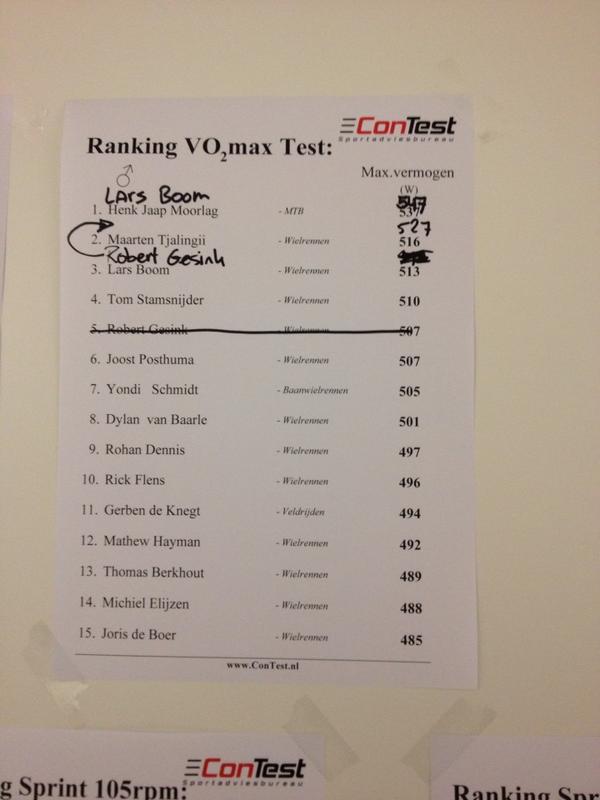
VO2 max Outputs for Professional Cyclists

VO2 is a good predictor of what a rider can deliver. Once motivation, pain threshold and other factors are added to the equation that value becomes obsolete. So don’t get to hung up on these numbers. Here’s a list of a few rider VO2 Max numbers.

VO2 Max Pro Numbers

Posted in Reviews, Training | Tagged , , , , | Leave a comment

IX WEEKS OF A POLARISED TRAINING INTENSITY DISTRIBUTION LEADS TO GREATER PHYSIOLOGICAL AND PERFORMANCE ADAPTATIONS THAN A THRESHOLD MODEL IN TRAINED CYCLISTS

SIX WEEKS OF A POLARISED TRAINING INTENSITY DISTRIBUTION LEADS TO GREATER PHYSIOLOGICAL AND PERFORMANCE ADAPTATIONS THAN A THRESHOLD MODEL IN TRAINED CYCLISTS

Craig M. Neal 1 , Angus Murray Hunter 1 ,

Lorraine Brennan 2 , Aifric O’Sullivan 2 , D. Lee Hamilton 1 ,

Giuseppe De Vito 3 , and Stuart D.R. Galloway 1 , *

Author Affiliations

↵ * University of Stirling s.d.r.galloway@stir.ac.uk Submitt
ed 29 May 2012. Revision received 13 December 2012. Accepted 17 December 2012.

Abstract

Aim: To investigate physiological adaptation with two endurance training periods differing in intensity distribution. Methods: In a randomised cross-over fashion, separated by 4-weeks of detraining, 12 male cyclists completed two 6-week training periods: (1) a polarised model (6.4(±1.4)hrs.week -1 ; 80%, 0%, 20% of training time in low, moderate and high intensity zones); and (2) a threshold model (7.5(±2.0)hrs.week -1 ; 57%, 43%, 0% training intensity distribution). Before and after each training period, following 2 days of diet and exercise control, fasted skeletal muscle biopsies were obtained for mitochondrial enzyme activity and monocarboxylate transporter (MCT1/4) expression, and morning first void urine samples collected for NMR spectroscopy based metabolomics analysis. Endurance performance (40km time trial), incremental exercise, peak power output, and high-intensity exercise capacity (95% Wmax to exhaustion) were also assessed. Results: Endurance performance, peak power output, lactate threshold, MCT4, and high-intensity exercise capacity all increased over both training periods. Improvements were greater following polarised than threshold for peak power output (Mean (±SEM) change of 8(±2)% vs. 3(±1)%, P

Posted in Reviews | Tagged , | Leave a comment