The Feed Zone Cookbook by Biju Thomas & Allen Lim

 The book is written by Biju Thomas and Allen Lim. Both are childhood immigrants to the USA and have found a way to combine both passions in their lives, cycling and food.

Biju Thomas

Biju Thomas was born in India and landed in the USA when he was three. He grew up in a family devoted to outdoing one and other in the kitchen. He is a self taught chef and has been involved in restaurants through the USA both as a consultant and instructor. His other passion is cycling and finally got to marry the two when he met Andy Hampson through fund raisers and events. He then teamed up with Jonathan Vaughters and Garmin. This is where he developed his relationship with Allen Lim. Thomas has cooked for Armstrong, Leipheimer, Danielson, Vande Velde and many more Pro Tour riders. He also runs his own site here.

Allen LimAllen Lim was born in the Philippines and moved to the USA at a young age. He has a doctorate from the Department of Integrative Physiology at CU Boulder. In 2004 after receiving the  doctorate he started working with professional cycling teams and has worked as a director of sport science for both Garmin and Radioshack Pro Tour Teams. His sports nutrition and hydration company ScratchLabs develops and provides training foods and sports drinks to the professional athlete.

The Feed Zone CookbookThe book has two Forwards, one by Levi Leipheimer and the other by Timmy Duggan. Both are well renowned and full time professional cyclist under current Pro Tour Contracts. Both riders explain the importance of food in their training programs and also highlight the advances in their diets due to their association with Lim and Biju. Leipheimer and Duggan both  agree that Lim’s and Thomas’s recipies have had a positive effect on there careers. The layout of the book is as follows:

  • Introduction by Allen Lim
  • Breakfast
  • Portables
  • Aprés
  • Dinner
  • Deserts
  • Basics

pasta and eggsand makes the book an easy one to read and understand. The introduction educates on common ingredients, how to build your plate, food timing, feed zone cooking guidelines, macronutrients and many other vital pieces of information in order for the athlete to be able to understand why, when, where, and how for their food intake be. For example the Food Timing pages are broken down into Pre-Workout (Breakfast), Workout(Portables) and Post-Workout (Aprés) providing excellent information including pictures and instruction. The introduction sets the reader up for the recipe section of the book and also provides great nutritional and eating habit advice for the professional athlete. This book can and should be used by all, not just athletes.Those interested in healthy eating but who still want some flavor, colour and aroma in their cooking and food should try this book.

The recipes section of the book provides two pages per recipe. The first page has a picture and the second page provides the ingredients and preparation/cooking instructions. Each recipe has details of serving numbers, time to cook, a low calorie tip and the nutritional value of the meal with Energy, Fat, Sodium, Carbs, Fiber and Protein described. All the information needed is supplied.

We’ve prepared and eaten five dishes from the book with great ease and enjoyed all of them. For us the type of food recipes in this book is what we eat every day so this only confirms our healthy lifestyles.

Oatmeal Dish

The rest of the book contains a good appendix which has Nutrition for Additions and Alternatives (nutrition values for tons of foods), if also provides a conversion appendix for uncooked to cooked foods + metric to imperial to us standard, a shopping list is included as appendix c…this I can’t figure out and finally the index covers everything else.

The book is  balance of practicality and science, blended to provide a smooth and easy guide to a healthy and sports demanding diet.

Posted in Reviews | Tagged , , , , | Leave a comment

Know Your Running Shoes and How to Lace them

If your going to start working out in the New Year a new pair of trainers will probably be on the cards, Here is a little bit of advise for those brave soles!

running-shoes-infographic

Posted in Uncategorized | Leave a comment

Weight Training for Cyclists by Ken Doyle & Eric Schmitz (2nd Ed.)

Ken Doyle has a degree in exercise physiology and is certified by the National Trainers Association along with the National Strength and Conditioning Association in the U.S.. He has coaching qualifications from the U.S. Cycling Federation and is Head Coach of the Santa Barbara Special Olympics Cycling Team. He has 25 years experience in coaching both teams and individual cyclists.

Eric Schmitz also holds a degree in exercise physiology and is a certified by the National Strength and Conditioning Association, the American College of Sports Medicine and the National Academy of Sports Medicine.

Weight Training for Cyclists is a specific book intended to instruct the cyclist in lifting weights accompanied by core/plyometric work as a supplement to a road program. The ethos is that by adopting this total body training program detailed in the book that the riders will improve their cycling strength, skills and endurance, without bulking up.

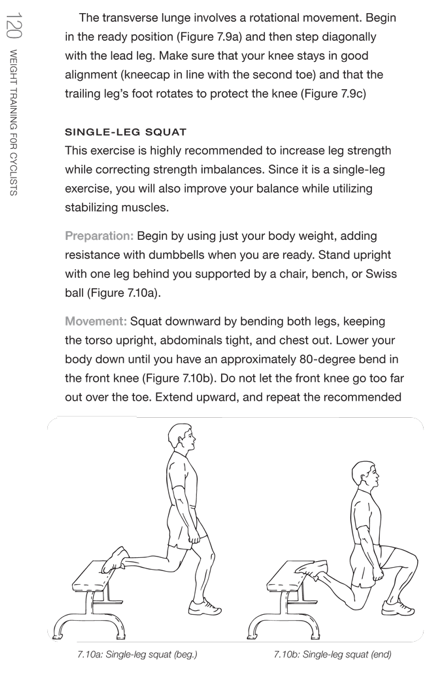
The book is full of detained illustrations on how to perform weight lifting exercises and how to complete core and plyometric workouts in safe and correct manor.

Weight Training for Cyclists

The book is has no Forward but in my opinion doesn’t need on as it stands on its own. It is well laid out and clear carried the athlete through the business of building developing and executing and good and well structured weight/core and light plyometric full year program.

Winter Training, Pre-Season and Maintenance during the cycling season are detailed and discussed along with the off season.

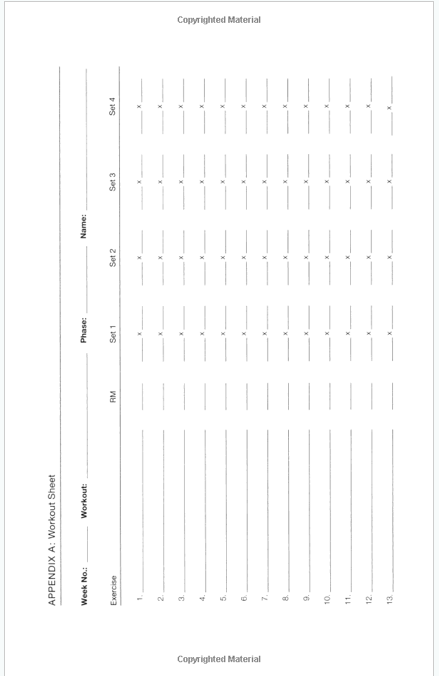
Their are sample Workout Sheet and a Blank Periodized Schedule provided in the book to get the athlete started in prescribing his/her own training program.

The contents include,

  1. Intro
  2. The Basics of Weight Training
  3. In the Weight Room
  4. Program Info
  5. Program Design
  6. Stretching fo Flexibility
  7. Lower Body Exercises
  8. Upper body Exercises
  9. Core Exercises
  10. Power Development
  11. Sample Program

Each chapter builds from the previous chapter making following the program construction easy. One rep charts and Percentage Charts are provided in order to make repetition and weight selections easy. Periodised program sample designs are shown for Track, Road, Mountain and Junior Riders.

Weight Training for Cyclists Snap Shot

The stretching and flexibility chapter is full of discussion and information images showing the correct movements and posture for the execution of the movements suggested. The next few chapters follow on from this and are detailed in their direction and instruction leaving it easy figure out what has to be done for each workout. The sample programs at the end of the book are a great help for self prescription. Eight pages have been dedicated to this with the sequence being Stabilization Phase, Strength Phase, Power Phase, Maintenance Phase with  a sample core prescription for beginner and advances.

Sample Workout Sheet

We would recommend this book the athletes self prescribing their training and we would advise that they become familiar with periodisation and the scheduling of other training to blend with what this book offers in order to achieve their goals.

Posted in Reviews | Tagged , , , | Leave a comment

“Power Meter Handbook” by Joe Friel Review

Joe Friel is a world renowned coach and author in the cycling and triathlon world. He has penned numerous articles and book such as

  • The Cyclist Training Bible
  • The Triathletes Training Bible
  • Your First Triathlon
  • Going Long
  • Training Past 50

along with many more. His books can be found here. He also has blogs which can be found here and here. Friel holds a Masters Degree in Exercise Science and is also a USA Cycling and Triathlon Coach. He is a founder and past chairman of the  USA Triathlon National Coaching Commission. He is also a founder of Training Peaks

We received Friels’ new book “Power Meter Handbook” at Sports & Exercise Engineering just before our Pre Christmas Training Camp in Maspalomas and put it in the suitcase for some easy reading. An easy reading it was. A sample from the book can be found here and a copy can be purchase from velopress who sent us our copy for review.

Power Meter Handbook by Joe Friel

Power Meter Handbook by Joe Friel

I asked my self why would Friel write such a book. Over the last few year the power meter has become an integral part in the athlete arsenal. The only book that I have read which could enable an athlete use a power meter is “Training and Racing with a Power Meter”. This book written by “Coggan and Hunter” is quite technical and can be daunting for most athletes. It contains numerous scientific references and details the scientific and algorithmic systems that make the power meter work. It also show how to use the power meter but on a very detail way and in detail. However Friel’s cuts through so much of this unnecessary information which the majority of the athletes are not interested in. From speaking to our own athletes and other athletes over the last number of years they all seem to want to put the Power Meter (PM) on the bike and press play. They want to be able to problem solve simple issues and take general care of their PM. This is exactly the information the Friel’s new book gives.

The Book is structured in simple steps

  1. Why use a Power Meter
  2. What is Power
  3. Getting started with your power meter
  4. Power Zones
  5. Riding Intensity
  6. Fitter an Faster
  7. Using you Power Meter for High Performance
  8. Power for Road Races and Time Trialling
  9. Power for Triathlons
  10. Power for Century Rides

Each chapter sets out in simple terms what is need to be done and how it is to be done. One of the good things I found with the book that if you are used to training with Heart Rate then is all you are doing is substituting your Heart Rate information with Power as the primary indicator for your training Stress. Although as described in the book Heart Rate should still not be discounted fully and should should be consulted along with the Power Data. The chapters describes all the information you get from your power meter and how to read it. training intensities and Power Zones are described. Periodization and training structures for power are also discussed. For those individuals who self prescribe their own training using Heart rate at the moment would by all means be in a position to self prescribe training session using power after reading this book.

Illustrations in the book are detailed, described and easily understood. Graphs for analyzing and planing your training prescriptions are describe in simple terms. Friel has also included samples of power profiles and training schedule layouts. All power Zones are also described in detail.

We think that this book is a great addition to the Power Meter market and will advise countless amateurs and potential professional athletes in how to use power as a training tool in their preparations for their Goals. Remember a Goal without a plan is only a wish!

Other Book Reviews

Posted in Uncategorized | Leave a comment

Train Low Sleep High……The Hypoxic Way

Using the “live-high+train-low” is a beneficial way to boost human performance in the lead up to ones A priority Race. The strategy should be planned out in advance and should be structured to achieve the most from the time at “live-high”. This is because the human body in time will adapt to the altitude and the “live-high”will be of less benefit to the athlete. This suggests that it is more beneficial to target Goals in a structured fashion. Following the execution of the goal a rest period should be prescribed to allow the physiological systems return to pre “live-high” levels.

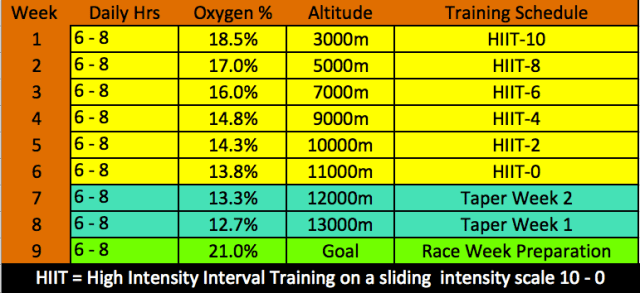
The bulk of structured and HIIT training should be completed prior to the Hypoxic conditioning. We recommend 9 weeks of conditioning in the “live-high+train-low” system structured as follows,

Hypoxic 9 week pre-race schedule

Hypoxic 9 week pre-race schedule

Results should be evident in 3-4 weeks with the above schedule and should last for 2 -3 weeks if the  “live-high” is discontinued. If the system is repeated and modified levels can be maintained fairly high throughout the year although the ultimate peak for ones Gaol will not be as high. When going to altitude above 13,000ft in the “live-high” phase it has been discussed that athletes start to loss muscle mass and become weakened. Care should also be taken not to go to high in altitude or to low in the Oxygen Saturation Percentage as the Graph below shows,Levels of Impairment for Oxy. Saturation Percentage Levels

Levels of Impairment for Oxy. Saturation Percentage Levels

Aerobic Capacity and Endurance Performance in cyclist can be improved as shown in this study here and also hypoxic training improves TT Performance and Power Output as can be seen from this study here.

We are available for consultation on your “live-high+train-low” system and we can be contacts here

Please be advised that these types of systems for training can be dangerous and each and every athlete is individual in his or her adaptions and physiological reactions to the “live-high+train-low”. We strongly advise that you undertake these systems with guidance from a professional.

Posted in Training | Tagged , , , | Leave a comment

Two weeks of high-intensity aerobic interval training increases the capacity for fat oxidation during exercise in women

  1. Jason L. Talanian1,
  2. Stuart D. R. Galloway2,
  3. George J. F. Heigenhauser3,
  4. Arend Bonen1, and
  5. Lawrence L. Spriet1

Department of Human Health and Nutritional Sciences, University of Guelph, Guelph, Ontario, Canada, Department of Sport Studies, University of Stirling, Stirling, Scotland; and Department of Medicine, McMaster University, Hamilton, Ontario, Canada Address for reprint requests and other correspondence: J. L. Talanian, Dept. of Human Health and Nutritional Sciences, Univ. of Guelph, Guelph, ON, Canada N1G 2W1 (e-mail: jtalania@uoguelph.ca)

Abstract

Our aim was to examine the effects of seven high-intensity aerobic interval training (HIIT) sessions over 2 wk on skeletal muscle fuel content, mitochondrial enzyme activities, fatty acid transport proteins, peak O2 consumption (V̇O2 peak), and whole body metabolic, hormonal, and cardiovascular responses to exercise. Eight women (22.1 ± 0.2 yr old, 65.0 ± 2.2 kg body wt, 2.36 ± 0.24 l/min V̇O2 peak) performed a V̇O2 peak test and a 60-min cycling trial at ∼60% V̇O2 peak before and after training. Each session consisted of ten 4-min bouts at ∼90% V̇O2 peakwith 2 min of rest between intervals. Training increased V̇O2 peak by 13%. After HIIT, plasma epinephrine and heart rate were lower during the final 30 min of the 60-min cycling trial at ∼60% pretraining V̇O2 peak. Exercise whole body fat oxidation increased by 36% (from 15.0 ± 2.4 to 20.4 ± 2.5 g) after HIIT. Resting muscle glycogen and triacylglycerol contents were unaffected by HIIT, but net glycogen use was reduced during the posttraining 60-min cycling trial. HIIT significantly increased muscle mitochondrial β-hydroxyacyl-CoA dehydrogenase (15.44 ± 1.57 and 20.35 ± 1.40 mmol·min−1·kg wet mass−1 before and after training, respectively) and citrate synthase (24.45 ± 1.89 and 29.31 ± 1.64 mmol·min−1·kg wet mass−1 before and after training, respectively) maximal activities by 32% and 20%, while cytoplasmic hormone-sensitive lipase protein content was not significantly increased. Total muscle plasma membrane fatty acid-binding protein content increased significantly (25%), whereas fatty acid translocase/CD36 content was unaffected after HIIT. In summary, seven sessions of HIIT over 2 wk induced marked increases in whole body and skeletal muscle capacity for fatty acid oxidation during exercise in moderately active women.

Posted in Reviews, Training | Tagged , , , , | Leave a comment

Maximal Lactate Steady State in Elite Endurance Athletes

Never under estimate the level of tolerance an athlete has for Lactic Acid. Be sure that the calculated figures are correct or training could be wasted particularly in the high end Zones.


Posted in Reviews, Training | Tagged , , , , | Leave a comment

Intervals, Thresholds, and Long Slow Distance: the Role of Intensity and Duration in Endurance Training

A Brief Conclusion

Optimization of training methods is an area of great interest for scientists, athletes, and fitness enthusiasts. One challenge for sport scientists is to translate short-term training intervention study results to long-term performance development and fitness training organization. Currently, there is great interest in high-intensity, short-duration interval training programs. However, careful evaluation of both available research and the training methods of successful endurance athletes suggests that we should be cautious not to over-prescribe high-intensity interval training or exhort the advantages of intensity over duration.

Here are some conclusions that seem warranted by the available data and experience from observations of elite performers:

•       There is reasonable evidence that an ~80:20 ratio of low to high intensity training (HIT) gives excellent long-term results among endurance athletes training daily.

•       Low intensity (typically below 2 mM blood lactate), longer duration training is effective in stimulating physiological adaptations and should not be viewed as wasted training time.

•       Over a broad range, increases in total training volume correlate well with improvements in physiological variables and performance.

•       HIT should be a part of the training program of all exercisers and endurance athletes. However, about two training sessions per week using this modality seems to be sufficient for achieving performance gains without inducing excessive stress.

•       The effects of HIT on physiology and performance are fairly rapid, but rapid plateau effects are seen as well.  To avoid premature stagnation and ensure long-term development, training volume should increase systematically as well.

•       When already well-trained athletes markedly intensify training with more HIT over 12 to ~45 wk, the impact is equivocal.

•       In athletes with an established endurance base and tolerance for relatively high training loads, intensification of training may yield small performance gains at acceptable risk.

•       An established endurance base built from reasonably high volumes of training may be an important precondition for tolerating and responding well to a substantial increase in training intensity over the short term.

•       Periodization of training by elite athletes is achieved with reductions in total volume, and a modest increase in the volume of training performed above the lactate threshold. An overall polarization of training intensity characterizes the transition from preparation to competition mesocycles. The basic intensity distribution remains similar throughout the year.

Posted in Reviews, Training | Tagged , , , , | Leave a comment

Winter Training On the Bike Sessions

Here is a list of some session I posted last winter..they might be of some help in self prescribing training….If your in need of coaching advice and planing give us a shout here

Winter Weekend 1

Winter Weekend 2

Winter Weekend 3

Winter Weekend 4

Winter Weekend 5

Also don’t forget our winter training camp here and also our new pager for training plans. At present their are only a couple nut with the launch of the new site a wider range will be available. See the training plans here


Posted in Uncategorized | Leave a comment

Maximal Strength Training Improves Cycling Economy in Competitive Cyclists

Maximal Strength Training Improves Cycling Economy in Competitive Cyclists

Sunde, Arnstein1; Støren, Øyvind1,2; Bjerkaas, Marius1; Larsen, Morten H1; Hoff, Jan2,3; Helgerud, Jan2,4

Sunde, A, Støren, Ø, Bjerkaas, M, Larsen, MH, Hoff, J, and Helgerud, J. Maximal strength training improves cycling economy in competitive cyclists. J Strength Cond Res 24(8): 2157-2165, 2010-The purpose of the present study was to investigate the effect of maximal strength training on cycling economy (CE) at 70% of maximal oxygen consumption (V̇o2max), work efficiency in cycling at 70% V̇o2max, and time to exhaustion at maximal aerobic power. Responses in 1 repetition maximum (1RM) and rate of force development (RFD) in half-squats, V̇o2max, CE, work efficiency, and time to exhaustion at maximal aerobic power were examined. Sixteen competitive road cyclists (12 men and 4 women) were randomly assigned into either an intervention or a control group. Thirteen (10 men and 3 women) cyclists completed the study. The intervention group (7 men and 1 woman) performed half-squats, 4 sets of 4 repetitions maximum, 3 times per week for 8 weeks, as a supplement to their normal endurance training. The control group continued their normal endurance training during the same period. The intervention manifested significant (p < 0.05) improvements in 1RM (14.2%), RFD (16.7%), CE (4.8%), work efficiency (4.7%), and time to exhaustion at pre-intervention maximal aerobic power (17.2%). No changes were found in V̇o2max or body weight. The control group exhibited an improvement in work efficiency (1.4%), but this improvement was significantly (p < 0.05) smaller than that in the intervention group. No changes from pre- to postvalues in any of the other parameters were apparent in the control group. In conclusion, maximal strength training for 8 weeks improved CE and efficiency and increased time to exhaustion at maximal aerobic power among competitive road cyclists, without change in maximal oxygen uptake, cadence, or body weight. Based on the results from the present study, we advise cyclists to include maximal strength training in their training programs.

Similar Posts

Professional Cyclists Bike Strength Training

Why Strength Endurance is Important!

Posted in Reviews, Training | Tagged , , , , , | Leave a comment