Regaining Fitness after 10 – 14 days rest

The mid season break is finished, the bike is back from the shop all shiny and mechanically sound, the motivation is high and you’ve some time on your hands with the bright mornings and late evenings. What to do!?.

images

Most riders will generally revert to what they were doing before the break or even start doing some long endurance miles again. In most cases this can actually slow you down and strip fitness for you. Research has shown that it takes roughly 6 weeks to totally detrain ones VO2 levels. So if you have only spent 14 days resting well then your VO2 system is not totally detrained and needs topping up. Detraining in general over a 14 day period is quite low for the average athlete and in most cases the average can be overtrained or carrying fatigue and the break will actually improve his/her performances.

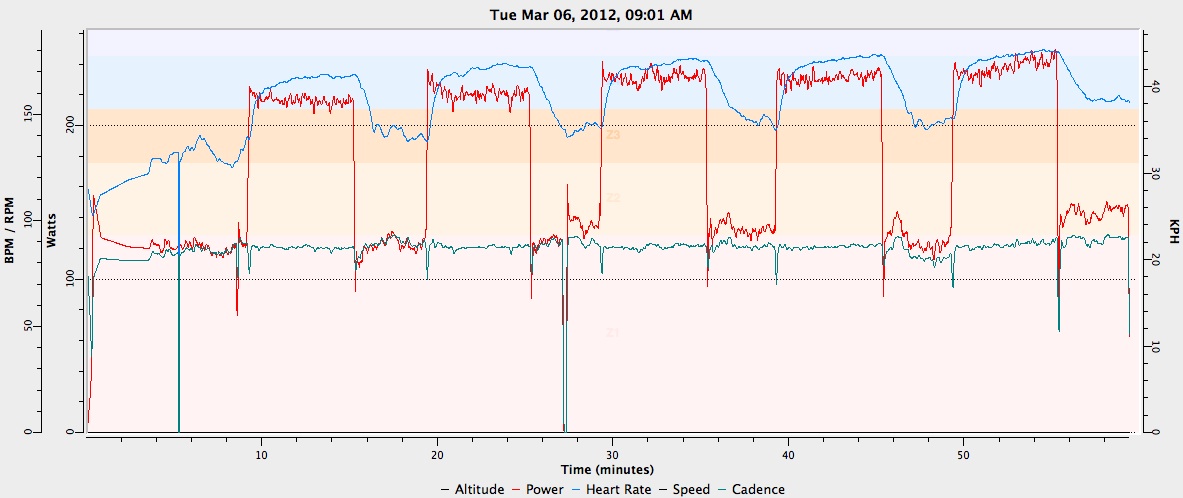
When returning to training it is advisable to start short and slow. Zone 1 for the first day and about 50% of your target race mileage. for the first 3 – 4 sessions the mileage can be increase along with the effort by 10 – 20% depending on how you feel until you have reach your target race mileage. Once you have this done the mileage can be dropped again and some hard intervals added to top up that VO2 tank. Efforts of 1, 3 & 5 mins are suggested. The recovery periods ratios for Zone 7 are 1:7 and Zone 6 being 1:4. Examples of this would be {power meter session 6no.(1min on 500w + 4mins off 180w) rpms @ 100} & {heart rate session 6no.(1min on Z6 + 4mins off Z1) rpms 100}. It is always important to conduct a warmup and warm down to accompany a workout of this type. Below is what your training file should look like after a session of this type is complete.

120306_threshold_intervals


With your goals set for the remaining months of the years racing calendar it is important that you analyse that goal and identify any weakness you may have in completing that goal. Lets say your goal is a 2 Day and you know that there is a Time Trial (TT) on one of the days. The TT is only short (5km) but its on a long drag and generally into a head wind. You think you have a chance of being top ten in the general classification but for your TT abilities. Now is the time to put some effort into improving your weakness and giving yourself a chance at that top 10. Find a stretch of road similar to the TT stretch and prescribe a day a week into your program for this particular type of conditioning. Another weakness may be you getting dropped on a short steep climb on last years final stage when you were in with a shout of a top 10. The climb is in the last 10km of the race. Again another weakness that needs attention and inclusion in you prescriptions. So your goal will dictate your new prescriptions in the lead up to that goal. Remember all the long miles and base work has been done during the winter and early part of the season and after your initial easy return to training week its now time to go and get specific again towards that goal.

You goal is in your hands!

Screen Shot 2013-06-13 at 12.45.57


If you are interested in being coached you can contact us through the form below or go to our main site at www.theathleteclinic.ie


← Back

Thank you for your response. ✨

Posted in Reviews, Training | Leave a comment

Which cadence is the most efficient and ecomonic for trained cyclists?

Journal of Strength & Conditioning Research:
March 2013 – Volume 27 – Issue 3 – p 637-642
doi: 10.1519/JSC.0b013e31825dd224
Original Research
The Effect of Cadence on Cycling Efficiency and Local Tissue Oxygenation
Abstract: Jacobs, RD, Berg, KE, Slivka, DR, and Noble, JM. The effect of cadence on cycling efficiency and local tissue oxygenation. J Strength Cond Res 27(3): 637-642, 2013-The purpose of this study was to compare 3 cycling cadences in efficiency/economy, local tissue oxygen saturation, heart rate, blood lactate, and global and local rating of perceived exertion (RPE). Subjects were 14 trained cyclists/triathletes (mean age 30.1 ± 5.3 years; V[Combining Dot Above]O2 peak 60.2 ± 5.0 ml·kg?1·min?1) who performed three 8-minute cadence trials (60, 80, and 100 rpm) at 75% of previously measured peak power. Oxygen consumption and respiratory exchange ratio were used to calculate efficiency and economy. Results indicated that both efficiency and economy were higher at the lower cadences. Tissue oxygen saturation was greater at 80 rpm than at 60 or 100 rpm at minute 4, but at minute 8, tissue oxygen saturation at 80 rpm (57 ± 9%) was higher than 100 rpm (54 ± 9%, p = 0.017) but not at 60 rpm (55 ± 11%, p = 0.255). Heart rate and lactate significantly increased from minute 4 and minute 8 (p < 0.05) of submaximal cycling. Local RPE at 80 rpm was lower than at 60 or 100 rpm (p < 0.05). It was concluded that (a) Trained cyclists and triathletes are more efficient and economical when cycling at 60 rpm than 80 or 100 rpm. (b); Local tissue oxygen saturation levels are higher at 80 rpm than 60 and 100 rpm; (c). Heart rate and blood lactate levels are higher with cadences of 80 and 100 than 60 rpm; and (d). Local and global RPE is lower when cycling at 80 rpm than at 60 rpm and 100 rpm. A practical application of these findings is that a cadence of 60 rpm may be advantageous for performance in moderately trained athletes in contrast to higher cadences currently popular among elite cyclists.

Posted in Uncategorized | Tagged , , | Leave a comment

Relaxation Techniques

Progressive Relaxation

This technique is often most useful when you tape the instructions beforehand. You can tape these instructions, reading them slowly and leaving a short pause after each one or listen to the progressive muscle relaxation

  • Lie on your back, close your eyes.
  • Feel your feet. Sense their weight. Consciously relax them and sink into the bed. Start with your toes and progress to your ankles.
  • Feel your knees. Sense their weight. Consciously relax them and feel them sink into the bed.
  • Feel your upper legs and thighs. Feel their weight. Consciously relax them and feel them sink into the bed.
  • Feel your abdomen and chest. Sense your breathing. Consciously will them to relax. Deepen your breathing slightly and feel your abdomen and chest sink into the bed.
  • Feel your buttocks. Sense their weight. Consciously relax them and feel them sink into the bed.
  • Feel your hands. Sense their weight. Consciously relax them and feel them sink into the bed.
  • Feel your upper arms. Sense their weight. Consciously relax them and feel them sink into the bed.
  • Feel your shoulders. Sense their weight. Consciously relax them and feel them sink into the bed.
  • Feel your neck. Sense its weight. Consciously relax it and feel it sink into the bed.
  • Feel your head and skull. Sense its weight. Consciously relax it and feel it sink into the bed.
  • Feel your mouth and jaw. Consciously relax them. Pay particular attention to your jaw muscles and unclench them if you need to. Feel your mouth and jaw relax and sink into the bed.
  • Feel your eyes. Sense if there is tension in your eyes. Sense if you are forcibly closing your eyelids. Consciously relax your eyelids and feel the tension slide off the eyes.
  • Feel your face and cheeks. Consciously relax them and feel the tension slide off into the bed.
  • Mentally scan your body. If you find any place that is still tense, then consciously relax that place and let it sink into the bed.

Toe Tensing

This one may seem like a bit of a contradiction to the previous one, but by alternately tensing and relaxing your toes, you actually draw tension from the rest of the body. Try it!

  1. Lie on your back, close your eyes.
  2. Sense your toes.
  3. Now pull all 10 toes back toward your face. Count to 10 slowly.
  4. Now relax your toes.
  5. Count to 10 slowly.
  6. Now repeat the above cycle 10 times.


Deep Breathing

Listen to the deep breathing track on our “Falling Asleep” CD.

By concentrating on our breathing, deep breathing allows the rest of our body to relax itself. Deep breathing is a great way to relax the body and get everything into synchrony. Relaxation breathing is an important part of yoga and martial arts for this reason.

  1. Lie on your back.
  2. Slowly relax your body. You can use the progressive relaxation technique we described above.
  3. Begin to inhale slowly through your nose if possible. Fill the lower part of your chest first, then the middle and top part of your chest and lungs. Be sure to do this slowly, over 8 to 10 seconds.
  4. Hold your breath for a second or two.
  5. Then quietly and easily relax and let the air out.
  6. Wait a few seconds and repeat this cycle.
  7. If you find yourself getting dizzy, then you are overdoing it. Slow down.
  8. You can also imagine yourself in a peaceful situation such as on a warm, gentle ocean. Imagine that you rise on the gentle swells of the water as you inhale and sink down into the waves as you exhale.
  9. You can continue this breathing technique for as long as you like until you fall asleep.


Guided Imagery

Listen to the guided imagery track on our “Falling Asleep” CD. In this technique, the goal is to visualize yourself in a peaceful setting.

  1. Lie on your back with your eyes closed.
  2. Imagine yourself in a favorite, peaceful place. The place may be on a sunny beach with the ocean breezes caressing you, swinging in a hammock in the mountains or in your own backyard. Any place that you find peaceful and relaxing is OK.
  3. Imagine you are there. See and feel your surroundings, hear the peaceful sounds, smell the flowers or the barbecue, fell the warmth of the sun and any other sensations that you find. Relax and enjoy it.
  4. You can return to this place any night you need to. As you use this place more and more you will find it easier to fall asleep as this imagery becomes a sleep conditioner.
  5. Some patients find it useful to visualize something boring. This may be a particularly boring teacher or lecturer, co-worker or friend.


Quiet Ears

Listen to the quiet ears track on our “Falling Asleep” CD.

  1. Lie on your back with your eyes closed.
  2. Place your hands behind your head. Make sure they are relaxed.
  3. Place your thumbs in your ears so that you close the ear canal.
  4. You will hear a high-pitched rushing sound. This is normal.
  5. Listen to this sound for 10-15 minutes.
  6. Then put your arms at your sides, actively relax them and go to sleep.

Source: Relaxation Techniques http://www.umm.edu/sleep/relax_tech.htm#ixzz2UVfMyK1u
University of Maryland Medical Center
Follow us: @UMMC on Twitter | MedCenter on Facebook


Posted in Reviews | Tagged | Leave a comment

Exercise, Nutrition and the Brain.

Exercise, Nutrition & the Brain

INTRODUCTION

Physical activity has been associated with the reduction of a number of physical and mental disorders. There is now ample evidence that physical activity will decrease the incidence of cardiovascular disease, colon and breast cancer and obesity, but also diseases such as Alzheimer’s, depression and anxiety (Gómez-Pinilla, 2011; Van Praag, 2009). A number of large, prospective and cross-sectional observational studies find that the dietary profile benefiting cognitive function with aging contains weekly servings (2 – 5) of fish and multiple daily servings of cereals, darkly or brightly colored fruits and leafy vegetables (Parrott & Greenwood, 2007). Both diet and exercise have therefore been used as interventions to reverse the possible negative effect of ageing in brain function. This paper will describe how exercise and nutrition can influence brain development, brain performance and cognition (e.g., remembering things, like where did I park my car at the airport?).

you-earn-your-body1

PRACTICAL APPLICATIONS AND CONCLUSIONS

Nutrition provides building blocks for the brain. Cognitive performance (e.g., mathematical thinking, simple addition problems) is better in children after a breakfast compared to the fasted state. There is a growing body of evidence to suggest that specific nutrients such as flavonoids and other polyphenols may be capable of counteracting age-related neuronal and cognitive decline. Exercise training in elderly people increases the size of the hippocampus (an area of the brain that is important for memory). Exercise positively influences neurotrophic factors (such as BDNF) leading to better learning and memory. Today, there is no convincing evidence that ingesting branched chain amino acids during prolonged exercise can postpone “central” fatigue. The ergogenic effect of carbohydrates during exercise is also present when washing the mouth with a CHO solution.

Exercise and nutrition clearly are both powerful means to positively influence the brain. We are only at the start of exploring what really happens in the brain during exercise, but it is clear that physical activity and nutrition have health-enhancing effects on the brain. In the near future, nutritional interventions will also focus on brain activity during exercise.

If you have the time I suggest you read the full artilcle.

Full Article Here

Posted in Reviews | Tagged , , , | Leave a comment

Carbohydrate feeding during exercise

Abstract

Carbohydrate ingestion can improve endurance capacity and performance. Since the 1980s, research has focused on optimizing the delivery strategies of these carbohydrates. The optimal dose of carbohydrate is still subject to debate, but recent evidence suggests that there may be a dose–response effect as long as the carbohydrate ingested is also oxidized and does not result in gastrointestinal distress. Oxidation rates of a single type of carbohydrate do not exceed 60 g·h−1. However, when multiple transportable carbohydrates are ingested (i.e. glucose and fructose), these oxidation rates can be increased significantly (up to 105 g·h−1). To achieve these high oxidation rates, carbohydrate needs to be ingested at high rates and this has often been associated with poor fluid delivery as well as gastrointestinal distress. However, it has been suggested that using multiple transportable carbohydrates may enhance fluid delivery compared with a single carbohydrate and may cause relatively little gastrointestinal distress. More research is needed to investigate the practical applications of some of the recent findings discussed in this review.

images-2

The Optimal Dose

There are few published reports of the effects of different doses of carbohydrate on exercise performance. Mitchell and co-workers (1989) compared ingestion of 37, 74, and 111 g of carbohydrate per hour (6%, 12%, and 18% carbohydrate solutions, respectively) or flavoured water. Compared with water, only the trial using 74 g of carbohydrate per hour significantly enhanced the performance of a 12-min isokinetic cycling time-trial following 105 min of continuous exercise. However, all of the performance results for the three carbohydrate trials were statistically similar. In an earlier investigation using a similar isokinetic performance ride, but following 105 min of intermittent exercise, the same authors reported improved performance compared with a water trial for 5%, 6%, and 7.5% carbohydrate solutions (33, 40, and 50 g · h−1, respectively), with no significant differences among the carbohydrate trials (Mitchell et al.1988).However, in this study both the amount and type of carbohydrate ingested were varied.

Fielding and colleagues (1985) reported that a minimum of 22 g of carbohydrate per hour is required to achieve a performance benefit. They had participants perform a cycling sprint after having exercised for 4 h. Performance improvements were observed when 22 g of carbohydrate were ingested every hour, whereas no effects were observed when half this dose was consumed (11 g · h−1). But in an experiment by Maughan and colleagues (Maughan, Bethell, & Leiper, 1996), the intake of 16 g of glucose per hour improved endurance capacity by 14% compared with water. However, no placebo was given in this study and therefore the results are less easy to interpret. To add to the uncertainty, Flynn et al. (1987) did not observed any differences in performance with the ingestion of placebo, 5% or 10% carbohydrate solutions that provided 0, 15, and 30 g of carbohydrate per hour, respectively, during 2 h of cycling. The most recent study to address this issue was that by Galloway and colleagues (Galloway, Wootton, Murphy, & Maughan, 2001). In this study a 2%, 6% or 12% carbohydrate solution was ingested by individuals exercising in cold conditions (10°C). There was no difference in time to exhaustion at 80% maximum oxygen uptake (VO2max).

In most studies, researchers have provided 40–75 g of carbohydrate per hour and observed performance benefits. Ingesting carbohydrate from a single source (e.g. glucose or maltodextrins) at a rate greater than 60–70 g · h−1 does not appear to be any more effective at improving performance than ingesting carbohydrate at 60–70 g · h−1, perhaps, as will be discussed later, because of limitations in the rate of absorption of a single type of carbohydrate from the intestine. It is also possible that the current performance measurements are not sensitive enough to identify the small differences in performance that may exist when comparing different carbohydrate solutions.

One might conclude that performance benefits can sometimes be observed with the ingestion of relatively small amounts of carbohydrate (e.g., 16 g · h−1), but more reliably so with larger amounts. If carbohydrate ingestion is to improve endurance performance, it is likely that the beneficial effect is primarily dependent on the oxidation of that carbohydrate.

Unknown

Unknown-1Conclusion

Carbohydrate ingestion can improve endurance capacity and performance. The optimal dose of carbohydrate is still subject to debate, but recent evidence suggests that there may be a dose–response effect as long as the carbohydrate ingested is also oxidized and does not result in gastrointestinal distress. Oxidation rates of a single type of carbohydrate do not exceed 60 g · h−1. However, when multiple transportable carbohydrates are ingested (i.e. glucose and fructose), oxidation rates can be increased significantly. To achieve these high oxidation rates, carbohydrate needs to be ingested at high rates and this has usually been associated with poor fluid delivery. There are suggestions, however, that using multiple transportable carbohydrates may enhance fluid delivery compared with a single carbohydrate. More research is needed to investigate the practical applications of some of the findings discussed in this review.

Link to Full Article: http://www.tandfonline.com/doi/full/10.1080/17461390801918971#.UZDdoJXU7zI
Posted in Reviews | Tagged , , , | Leave a comment

Carbohydrates for training and competition.

Carbohydrates for Training and Competition.

Department of Sports Medicine, Australian Institute of Sport, Belconnen, ACT, Australia. louise.burke@ausport.gov.au

Abstract

An athlete’s carbohydrate intake can be judged by whether total daily intake and the timing of consumption in relation to exercise maintain adequate carbohydrate substrate for the muscle and central nervous system (“high carbohydrate availability”) or whether carbohydrate fuel sources are limiting for the daily exercise programme (“low carbohydrate availability”). Carbohydrate availability is increased by consuming carbohydrate in the hours or days prior to the session, intake during exercise, and refuelling during recovery between sessions. This is important for the competition setting or for high-intensity training where optimal performance is desired. Carbohydrate intake during exercise should be scaled according to the characteristics of the event. During sustained high-intensity sports lasting ~1 h, small amounts of carbohydrate, including even mouth-rinsing, enhance performance via central nervous system effects. While 30-60 g · h(-1) is an appropriate target for sports of longer duration, events >2.5 h may benefit from higher intakes of up to 90 g · h(-1). Products containing special blends of different carbohydrates may maximize absorption of carbohydrate at such high rates. In real life, athletes undertake training sessions with varying carbohydrate availability. Whether implementing additional “train-low” strategies to increase the training adaptation leads to enhanced performance in well-trained individuals is unclear.

View Abstract

Posted in Reviews | Tagged | Leave a comment

Nutrition & Elite Young Athletes

Nutrition and elite young athletes.

School of Sport and Exercise Sciences, University of Birmingham, Birmingham, UK. A.E.Jeukendrup@bham.ac.uk

Abstract

Nutrition can play an essential role in the health of elite young athletes as well as exercise performance. Children and adolescents need adequate energy intake to ensure proper growth, development, and maturation. In addition, the requirements may further increase with increasing exercise training. There are, however, several metabolic differences that result in slightly different advice for young versus adult athletes. For example, younger athletes generally rely more on fat as a fuel, have smaller glycogen stores and have a limited glycolytic capacity. This would imply reduced carbohydrate requirements but a greater capacity to oxidize fat. There are also differences in thermoregulation, although the exact impact on fluid requirements is not clear. The limited evidence suggests that acute energy and fluid imbalances can be detrimental to performance and there may be benefits of ingesting carbohydrate and fluid during exercise, especially during more prolonged exercise. Exogenous carbohydrate oxidation rates have been reported to contribute more to energy expenditure in children. This may, however, simply be a reflection of the fact that the oxidation of this carbohydrate is not limited by body size, but by absorption. Absorption rates are likely to be similar in children and adults and therefore exogenous carbohydrate oxidation rates should be comparable. The relative contribution will therefore be higher because of the lower absolute intensities in children. There are a large number of questions still unanswered and sports nutrition advice to the elite young athlete is largely extrapolated from the adult population. Therefore, more research is needed in the years to come to give better advice to these young athletes.

 Link to paper: http://www.ncbi.nlm.nih.gov/pubmed/21178366

Posted in Reviews | Tagged , , , , | Leave a comment

Athlete Infection Control

Athlete Infection Control

Skin infections in athletes are particularly common and a little bit of self-education and a small management plan can greatly reduce or eliminate the chances of infection. One very simple tip for athletes traveling from place to place competing is to get a sterilizing baby wipe and to clean the remote control in the hotel room your staying in. The remote control could have been touched by a 1000 people before you and never properly cleaned. You turn on the television to get the news by touching the remote and then maybe flick through a few channels. Five minutes later you put your finger in your eye because you have and eyelash in it and Bob’s your uncle……yes you’ve guessed it your on the toilet the next day for the day.

So here are a few tips and idea’s for both Athlete’s and Team Staff to help you stay clean of the dreaded infection.

▪   A clean environment around you the athlete must be maintained.

▪   Team staff must be aware of what they are touching and be vigilant to their own Hand Hygiene when moving riders bags, handling bottles etc etc.

▪   Adequate hygiene materials should be on hand at all times. For example cleaning directly post race to showering with antimicrobial products at the hotel or home.

▪   Someone within the team should show leadership and be vigilant and offer constant reminders to all staff and athletes regarding hygiene.

▪   Ensure that the type of disinfectant that you are using is suitable and this should be checked with the person on the team charged with hygiene control.

▪   When hands are visibly dirty wash them. This should be done by wetting the hands, applying antimicrobial soap and rubbing hands together for at least 15 seconds ensuring all areas are covered. Then rinse in clean water and dry with clean towel or clean paper napkin

▪   If hands are clean then you may use a simple alcohol-based rub

▪   If you are dealing with an athlete your hands should be decontaminated before and after touching naked skin…both before and after gloves

▪   Athletes should shower after every training session be it heavy or light. If showers are unavailable then use antimicrobial wipes or spray. A simple and easy way to do this is to get a clean small towel and a spray bottle. Put some Eau de Cologne into the spray bottle and top it up with water. This will disinfect your skin and cause you no harm.

▪   All training gear and clothing that can be washed should be washed before it is worn again. As athletes have reactions to certain biological washing powders care should be taken in which one is used.

▪   All equipment should be wiped down with antimicrobial solution, even knee supports or helmets for example. This should be done in accordance with the manufacturers guidance

▪   Do not share your towel or any other piece of equipment with any other athletes.

▪   If you have any open wounds it is advisable to stay away from whirlpools and common area tubs etc.

▪   If you get any cuts, scrapes or wounds it is advisable to have then attended to by some who is capable of cleaning and disinfecting the affected area. The correct covering be it semi-occlusive or occlusive should be used for the appropriate wound.

▪   For road bike users change your handle bar tape more frequently and spray some antimicrobial solution on it every few days and leave outside to dry

▪   The same can be done with your saddle although your not going to change it so clean it correctly with soapy water and the spray some antimicrobial solution on it.

▪   When your staying in a hotel don’t leave your kit bag scattered all over the dirty floor, one never knows what was walked into and onto the floor.

▪   In the hotel bathroom close the toilet seat and don’t leave your toilet kit bag lying around open. Take it back into the bedroom beside you.

▪   Don’t walk around in your bare feet always bring your house shoes with you.

▪   At home clean the TV remote control once a week with antimicrobial solution and you could also do the steering wheel of the car and the door handle throughout the house.

▪   The computer keyboard at home and at work is also a high risk area so give them a clean on a regular basis.

▪   Try and keep your hands out of your mouth or away from your nose and eyes unless you have washed them.

If you put some of these little tips into play you can be sure that you will be reducing the risk of contracting an infection. Can I also advise that every individual is different and that the information provided above is provided in good faith. I you are using any products you should read the labels clearly and check with your local supplier or medical practitioner if you are unsure.


Posted in Training | Tagged | Leave a comment

Top 10 Tips for the Cyclist or Endurance Athlete

1. Under & Over Hydration

Both under & over hydration will lead to hyponatremia through different processes. Research has suggested 500-750 mil/hr will deal with most athletes needs under general conditions. Remember that both to little and to much liquid will cause you to under perform. If you need to consume over 850mil/hr it is recommended that you pay particular attention to additional electrolyte in your liquid in order to prevent dilutional hyponatremia. Remember some days you may only need to consume 500-700 mil/hr and other days 600-800 mil/hr so use your training to evaluate your own personal requirements as an athlete. the values here are relevant to a 75kg male athlete.

2. Not Eating Protein During & After Exercise.

In order to prevent your body from lean muscle tissue catabolism it is important that you consume some protein on riders longer that 2 hours. In some riders it might be as low as 1:45 hours or may be as long as 2:30 hours into the riders training session where your body starts to utilize protein to fulfill its energy requirements. Protein could end up providing 10% ±5 of your energy requirements. A simple and easy way to ascertain if this is happening to you in your rider is to smell your base layer post training. If it has a high ammonia smell then your deficient in carbohydrates and using protein for fuel. There are various product on the market for dealing with this problem.

Unknown

3. Wrong Food Type Consumption During Exercise

Eating to much solid food close to an event will cause bloating, nausea and lethargy. It will also divert blood away from the active muscle to the stomach to digest the food. In addition to this the digestive enzymes, fluids and time involved will reduce your performance capabilities. Research has shown that liquid food and gels have not reduced performance as much as solid foods have. It is understandable in long stage races that solid food must be eaten but this is done on a controlled basis by the professionals and years of experience have thought them to eat what suits them best. As for the one day and sportive riders the liquid product affords the best performance benefits. So eat your last solid meal 3 hours before you start and then continue on the liquids & gels till the finish.

4. Wrong Pre Race/Workout Fueling Strategy

Don’t stuff yourself the night before an event in the name of carb-loading. Excess carbs will be stored as fat and to maximize glycogen stores it takes many weeks of training and post workout refueling techniques. Your pre race meal should only top off what you burnt from your meal the previous night. You should only top off what you have been burning and allow the main meal to be digested.

images

5. Doing or trying something new for the first time

The most important thing that you do on race day is to be consistent with your strategies and habits pre, during and post race. Use the strategies that have worked for you in the past. This is the wrong time to be introducing some new element into your racing strategy. It could go well or more often that not it could go pear shaped. I you have a new or novel idea and think that it might benefit your performance try it out in training and see what advantage it gives you and also think about the practicalities of trying to introduce it into a race scenario of 150 riders or athletes tearing down the road.

6. Staying true to your strategy 

Once you have landed at your race and are committed to your strategy, stay committed. One of the fundamental thing athletes do wrong is to doubt themselves or their strategy and then to change it half way thorough a race or even before it has begun. You might have decided to TT at a particular Heart Rate or you might have decided to watch a particular athlete who is performing well. I you have chosen a strategy, commit and stick to it. It is understandable that at times one might have to change a strategy because of external issues but in the main the athlete should have full commitment and belief in hi.her own strategy and stick with it. You can always change it after the race and improve it for the next event through you post race debrief.

Unknown-3

7. To much pre race training and not enough recovery

Once the racing season starts athletes tend to keep training at pre race season levels and don’t allow enough recovery time during the week between events. This leads to a build up of stress in the body and eventually will bring the athlete deep into the valley of fatigue. Once this happens the athletes performance will decline, global mood disturbances will become apparent and the desire to race will diminish. It is alway good to be fresh when racing. Be sure to monitor fatigue levels and take a rest week every every month. As you age you require more time for recovery so keep this in mind.

8. Poor General Body Maintenance

Simple things like not cleaning shorts can lead to saddle sores, even if only used for a few minutes, poor hand hygiene can lead to stomach upsets, not getting a massage very often can lead to tightness and trigger points developing throughout the body and lead eventually to imbalances and injury. Not dealing with a little niggle in the knee can lead to maybe full blown tendentious . So because you are using your body at a high level and introducing a high level of stress it is important that you listen and have your checkups done regular.

9. Correct Clothing for the Event

When racing or competing in a sportif it is important that you are as comfortable for the day as possible. Always check the local weather for the day and ensure you have enough clothing needed for the conditions. It is easier to take clothing off than put it on. I you have a problem doing this I recommend you go to a quiet road and practice how to put a rain cape on and off. Do the same with gloves and overshoe. If nothing it will help you improve your bike handling skills. Service cars, team cars and even marshal will all take a rain cape off you. You can even put your race bag into the team car which might contain arm-warmers or heavier gloves should conditions be set to deterioate during an event. So be smart and be ready.

Unknown-2

10. Don’t believe everything You Here

The world of sports is full of stories from the hero to the man you only and will only ever meet once. Most of what you hear will be fiction from guys not training and being off the bike for 10 years and winning to guys working 40 hours a week and doing 25 hours on the bike. Be fair to your self and develop what works for you, if you need answers contact a coach or someone with experience in the field your enquiring about. Look for people currently looking after top athletes as they will be the ones with the most current and up to date information. This is what we do http://www.athleteclinic.com You can contact us on our web site contact page to arrange and appointment.

Unknown-1

Posted in Training | Tagged , | 1 Comment

Combining different carbohydrates increases oxidation and delivery, reducing fatigue and improving performance

MULTIPLE TRANSPORTABLE CARBOHYDRATES AND THEIR BENEFITS

KEY POINTS

  • During prolonged exercise, the performance benefits of carbohydrate ingestion may be achieved by maintaining plasma glucose concentration and high rates of carbohydrate oxidation.
  • Limitations to exogenous carbohydrate oxidation appear to be in the absorptive process most likely because of a saturation of carbohydrate

    transporters. By using a combination of carbohydrates that use different intestinal transporters for absorption (multiple transportable carbohydrates), carbohydrate delivery and oxidation can be increased.

  • Exogenous carbohydrate oxidation rates reach values of 1.75 g/min with multiple transportable carbohydrates whereas previously it was thought that 1 g/min was the absolute maximum.
  • The increased carbohydrate oxidation with multiple transportable carbohydrates was accompanied by increased fluid delivery and improved oxidation efficiency and thus the likelihood of gastrointestinal distress may be diminished.
  • Studies also demonstrated reduced fatigue and improved exercise performance with multiple transportable carbohydrates compared with a single carbohydrate.
  • Multiple transportable carbohydrates, ingested at high rates, can be beneficial during endurance sports where the duration of exercise is 2.5 h or more.
  • The advice for prolonged endurance events (2.5 h or longer) is an intake of 90 g of multiple transportable carbohydrates per hour. This advice is not expressed relative to body mass because body size/mass appears to play no major role in exogenous carbohydrate oxidation.

INTRODUCTION

During moderate intensity exercise carbohydrate and fat are the two important fuels and their relative contribution is dependent on a number of factors including the pre-exercise carbohydrate stores, the exercise intensity and duration and the training status of the subject (Jeukendrup, 2003). During intense exercise (and thus most competitive situations) carbohydrate is the critical fuel, and the reduction of carbohydrate stores in the muscle (muscle glycogen) has been linked to exercise performance (Bergström et al., 1967; Rodriguez et al., 2009). In the 1960s and into the ‘80s studies investigated the role of high muscle glycogen stores at the onset of exercise (carbo-loading) on exercise performance (Bergström et al., 1967). From the ‘80s until now research has focused more on the potential role of carbohydrate ingested just before and during exercise. Although the exact mechanisms are still not entirely clear, it has been known for some time that carbohydrate ingestion during exercise can increase exercise capacity (time to exhaustion) and improve exercise performance (time trials) (for reviews see, Jeukendrup, 2004, 2008, 2010, 2011; Jeukendrup & McLaughlin, 2011). Since then, studies have investigated the effects of different feeding regimens, different types of carbohydrate and different amounts of carbohydrate in order to make the recommendations more specific. This Sports Science Exchange article will focus on these recent studies and will be limited to the role of carbohydrate ingested during exercise.

page1image33344
page1image35728

INGESTING DIFFERENT TYPES OF A SINGLE CARBOHYDRATE

To study the efficacy of various carbohydrates isotopic labeling has been used. Basically the carbon in the carbohydrate is labeled with 13C and after oxidation in the body the 13C will appear in the CO that is exhaled. By knowing the 13C enrichment of the drink, the total CO produced and the 13C enrichment of the exhaled CO , it is possible to measure exogenous carbohydrate oxidation or the amount of carbohydrate that has been used from the blood. This method enabled investigators to describe the time course of oxidation of a carbohydrate and also compare the oxidation of different carbohydrates. During exercise most carbohydrate oxidation takes place in muscle, and studies have demonstrated that nearly all of the ingested carbohydrate appears in the circulation and is used by muscle (Jeukendrup et al., 1999). When carbohydrates are ingested from the onset of exercise and at regular intervals thereafter, oxidation of the ingested carbohydrate increases and typically reaches a plateau after 60-90 min. A variety of carbohydrates including glucose, fructose, galactose, sucrose, maltose and glucose polymers were studied. It was found that fructose was oxidized at lower rates than glucose (Burelle et al., 2006) and galactose oxidation rates were almost 50% lower (Burelle et al., 2006; Leijssen et al., 1995). This was explained by differences in absorption as well as the fact that fructose and galactose have to be converted to glucose in the liver before they can be oxidized in the muscle. Maltose (2 glucose molecules) and glucose polymers (multiple glucose molecules) behave identically to glucose, indicating that the hydrolysis, which takes place in the oral cavity and intestines, was not a limiting factor. Even a high molecular weight starch is oxidized at the same rate as glucose (Rowlands et al., 2005). Interestingly, sucrose (2 glucose molecules) ingestion seems to give high oxidation rates even though the breakdown of sucrose results in glucose and the fructose oxidized at lower rates. Other, less common carbohydrates, like isomaltulose and trehalose are also oxidized at lower rates.

In summary, there are many different types of carbohydrates and these can be roughly divided into two categories: carbohydrates that are oxidized rapidly (up to ~60 g/h or 1 g/min) and carbohydrates oxidized relatively slowly (up to ~30 g/h or 0.5 g/min). Rapidly oxidized carbohydrates include glucose, maltose, sucrose, maltodextrin and amylopectin starch. Slower oxidized carbohydrates include fructose, galactose, isomaltulose, trehalose and amylose.

Prior to 2004, it was believed that even when “fast carbohydrates” were ingested during exercise, these could not be oxidized at rates higher than 1 g/min (60 g/h). The evidence has been reviewed in detail elsewhere (Jeukendrup, 2004, 2008; Jeukendrup & Tipton, 2009). The views at that time are still reflected in the current guidelines by the American College of Sports Medicine (ACSM), which state that athletes should take between 30 and 60 grams of carbohydrate per hour (Rodriguez et al., 2009).

REASONS FOR LIMITATIONS TO EXOGENOUS CARBOHYDRATES
Although the observation of a maximum exogenous carbohydrate oxidation rate of around 1 g/min was generally accepted, the reasons for this apparent ceiling were unclear. The potential limitations were thought to include gastric emptying, intestinal absorption, liver glycogen synthesis and therefore reduced systemic appearance of the carbohydrate (glucose), or muscle glucose uptake. It was demonstrated in a number of studies that gastric emptying of carbohydrate greatly exceeded 1 g/min and therefore this was excluded as the main limiting factor. At the time it seemed impossible that intestinal absorption was limiting because many textbooks quoted that the capacity to absorb carbohydrate was virtually unlimited. After absorption the carbohydrate would end up in the liver through the portal vein and it was in theory possible that carbohydrate was stored there before it could reach the muscle. However, one study in particular suggested that the liver could not be the limiting factor either. In this study subjects exercised for 5 h and ingested relatively large amounts of glucose (Jeukendrup et al., 2006). There was so much carbohydrate unaccounted for when oxidized carbohydrate was subtracted from ingested carbohydrate that it would have been impossible for this amount to be stored in the liver. It was also demonstrated that muscle glucose uptake was not limiting as glucose uptake was much higher when glucose was directly infused into the circulation (Hawley et al., 1994). Since neither gastric emptying, liver glycogen synthesis, nor muscle glucose uptake could explain the limitations to exogenous carbohydrate oxidation, attention shifted to intestinal absorption of the carbohydrate.

MULTIPLE TRANSPORTABLE CARBOHYDRATES

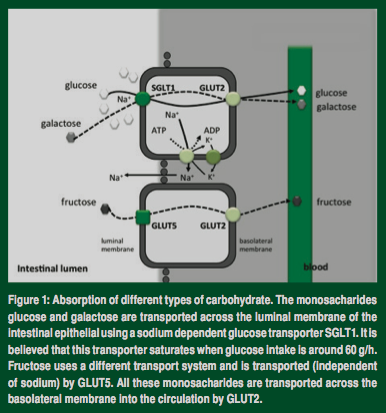
Glucose is absorbed through a sodium dependent glucose transporter protein called SGLT1 (Figure 1). This transport protein in the brush border membrane has a high affinity for glucose and galactose but not fructose (Kellett, 2001). It was hypothesized that the limitation for exogenous carbohydrate oxidation was saturation of the SGLT1 transporters in the brush border membrane of the intestine, which may occur at high rates of glucose ingestion (Jentjens et al., 2004). So essentially when a carbohydrate that uses SGLT1 is ingested at a rate of 1 g/min, this transporter may saturate and ingesting more of a specific carbohydrate may not result in an increased appearance of that carbohydrate in the circulation.

Screen Shot 2013-03-27 at 09.21.38

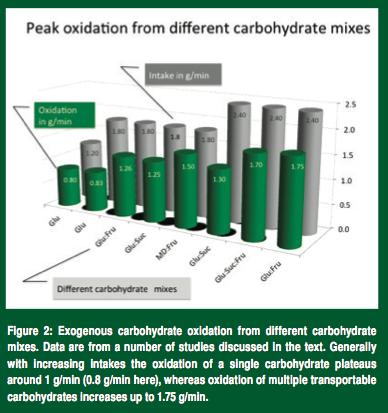
ructose absorption follows a completely different path and is not affected by the saturation of SGLT1. It is absorbed independently by a sodium independent transporter called GLUT5 (Ferraris & Diamond, 1997). So the combined ingestion could result in an increased total delivery of carbohydrates into the circulation and increased oxidation by the muscle. Subsequent studies were therefore designed to deliver glucose at a rate of 1.2 g/min and fructose at a rate of 0.6 g/min with the total carbohydrate ingestion being 1.8 g/min and compare this to the ingestion of 1.8 g/min of just glucose. In this groundbreaking study by Jentjens et al. (2004a), trained cyclists exercised for 3 h at a moderate intensity and ingested equal energetic amounts of either glucose or glucose:fructose. The oxidation rates in the glucose trials peaked at ~ 0.8 g/min whereas the oxidation rates with glucose:fructose peaked at ~ 1.26 g/min (Figure 2, left three bars). This was the first study to demonstrate that, with the use of multiple transportable carbohydrates, exogenous carbohydrate oxidation rates could be increased to well over 1 g/ min. It also demonstrated that fructose, when used in combination with glucose, can be oxidized at relatively high rates.

Screen Shot 2013-03-27 at 09.22.50

he studies that followed investigated various combinations of different carbohydrates such as glucose:sucrose:fructose, glucose:sucrose, and maltodextrin:fructose, and these blends of carbohydrate were ingested at different ingestion rates (Figure 2). The ingestion of a glucose:maltose mixture was oxidized at the same rate as glucose only, because maltose is hydrolysed to glucose and thus uses the same intestinal carbohydrate transporter SGLT1 (Jentjens et al., 2004b). A mixture of glucose:sucrose however, ingested at a rate of 1.8 g/min resulted in 18% higher peak exogenous carbohydrate oxidation rates (Jentjens et al., 2004ab). When glucose:sucrose was ingested at very high rates (2.4 g/min) oxidation rates peaked at 1.2 g/min, lower than anticipated. Although direct comparisons between studies are somewhat problematic, it appeared that in this study a very high ingestion rate did not result in higher oxidation rates compared with glucose:fructose at more practical intakes (Jentjens et al., 2004a). When a mixture of glucose:sucrose:fructose was ingested at these high rates, however, peak oxidation rates as high as 1.7 g/min were observed (Jentjens et al. 2004c). Finally, the ingestion of glucose:fructose at an average rate of 2.4 g/min resulted in 65% greater oxidation than glucose only and very high peak oxidation rates of 1.75 g/min were reached (Jentjens & Jeukendrup, 2005). This is the highest exogenous carbohydrate oxidation rate reported in the literature to date.

However, from a practical point of view the most exciting finding was perhaps that of the maltodextrin:fructose mix (Wallis et al. 2005). This combination of carbohydrates is not as sweet as the other mixtures discussed above and is therefore more palatable. In this study oxidation rates reached 1.5 g/min at an ingestion rate of 1.8 g/min.

EFFECTS ON EXERCISE PERFORMANCE

In subsequent studies, more practical but still quite large amounts of carbohydrate were ingested by the subjects (1.5 g/min) and it was observed that the subjects’ ratings of perceived exertion (RPE) tended to be lower with the mixture of glucose and fructose compared with glucose alone and that cyclists were able to maintain their cadence better toward the end of 5 h cycling (Jeukendrup et al., 2006). Rowlands et al. (2008) also reported reduced fatigue when ingesting a maltodextrin:fructose mix vs. maltodextrin alone. It was also demonstrated that a glucose:fructose drink could improve exercise performance (Currell & Jeukendrup, 2008) compared with a glucose drink. Cyclists exercised for 2 h on a cycle ergometer at 54%VO2max during which they ingested either a carbohydrate drink or placebo and were then asked to perform a time trial that lasted another ~ 60 min. The results were astounding. When the subjects ingested a glucose drink (at 1.8 g/min), they improved their average power output by 9% as compared with placebo (254 vs. 231 W). However, when they ingested glucose:fructose, there was another 8% improvement of the power output over and above the improvement by glucose ingestion. This was the first study to demonstrate a clear performance benefit with glucose:fructose compared with glucose (Currell & Jeukendrup, 2008). These results were confirmed by further studies which showed improved 100k time trial performance (Triplett et al., 2010), improved mountain bike race performance (Rowlands et al., 2012), as well as improved high intensity laboratory cycling performance (Rowlands et al., 2012).

It is important to note that in order to benefit from a glucose:fructose mixture it may be necessary to saturate glucose transporters in the intestine by ingesting sufficient quantities of glucose. When carbohydrate is ingested at rates of 0.8 g/min and saturation may not occur, ingesting part of this carbohydrate as fructose may not result in higher exogenous carbohydrate oxidation rates (Hulston et al., 2009).

It is also likely that the exercise duration needs to be relatively long for these ergogenic effects to become obvious. Studies so far have demonstrated these effects when exercise was 2.5 h or longer. It is also important to note that these studies were all performed in relatively well-trained cyclists who exercised at high power outputs and had high carbohydrate oxidation rates and energy expenditures.

hese results are unlikely to be applicable to the 5 h marathon runner who completes a marathon at a much lower absolute intensity with much lower total carbohydrate oxidation rates.

OTHER EFFECTS OF MULTIPLE TRANSPORTABLE CARBOHYDRATES

More recent work focused on the effects of high rates of mixed carbohydrate ingestion on gastric emptying and fluid delivery. Again the results were remarkable. Gastric emptying measured by either a gastric tube or by using a 13C-acetate tracer was found to be improved with a glucose:fructose mixture compared with glucose (Jeukendrup & Moseley, 2010). Fluid delivery has also been shown to be improved with glucose:fructose compared with glucose in a number of studies (Currell et al., 2008; Jentjens et al., 2006; Jeukendrup & Moseley, 2010). In addition, studies have demonstrated greater oxidation efficiency with multiple transportable carbohydrates compared with a single carbohydrate. This indicates that more of the ingested carbohydrate is oxidized and less is residual in the intestine. As a result of faster gastric emptying and increased absorption, most studies have also reported less gastrointestinal distress with multiple transportable carbohydrates compared to an isoenergetic amount of a single carbohydrate source (Rowlands et al., 2012).

INDIVIDUAL DIFFERENCES

Individual differences in exogenous carbohydrate oxidation are relatively small. There appears to be no correlation between body mass and exogenous carbohydrate oxidation. The reason for this is probably because the limiting factor is carbohydrate absorption and absorption is largely independent of body mass. It is likely that the small variation in carbohydrate oxidation is a result of the absorptive capacity of the intestine which in turn may be related to the carbohydrate content of the diet. It has been shown in animal studies that intestinal transporters were upregulated with increased carbohydrate intake and one human study so far has demonstrated a similar effect (Cox et al., 2010). Early studies showed no difference in exogenous carbohydrate oxidation between well trained and untrained individuals (Jeukendrup et al., 1997; van Loon et al., 1999). Perhaps when the absolute exercise intensity and therefore total carbohydrate oxidation drops below a certain level, exogenous carbohydrate oxidation may also be reduced (Pirnay et al., 1982). Therefore, recommendations based on these studies may have to be adjusted downwards slightly for those exercising at lower absolute exercise intensities.

Since exogenous carbohydrate is independent of body mass or muscle mass, but dependent on absorption and to some degree power output, the advice given to athletes should be in absolute amounts (Jeukendrup, 2010). These results clearly show that there is no rationale for expressing carbohydrate recommendations for athletes per kg body mass.

PRACTICAL IMPLICATIONS

• Based on the evidence here, guidelines may have to be adjusted for prolonged events (>2.5 h). During these events, competitive and well-trained athletes should consider increasing their carbohydrate intake to 90 g/h.

• The carbohydrate source should be a mix of glucose and fructose, or maltodextrin and fructose in a ratio of roughly 2:1, so there is 60 g/h of glucose or maltodextrin (to saturate the SGLT1 transporters) and 30 g/h of additional fructose for oxidation.

• Higher rates of intake may be considered and tolerated, but are not always possible from a practical standpoint.

• The practical implications and the recommendations for athletes are discussed in more detail in another SSE article (JEUKENDRUP SSE 2012) and in a recent publication (Jeukendrup, 2011).

CONCLUSION

The ingestion of a combination of carbohydrates that use different intestinal transporters for absorption, carbohydrate delivery and oxidation can be increased. These increases are seen when a carbohydrate is ingested that uses SGLT1 for absorption and a secondary carbohydrate that uses a different transport system are ingested simultaneously. Increased oxidation is only seen when the SGLT1 dependent carbohydrate is ingested at high rates (1 g/min). Whereas previously it was believed that the maximum absolute oxidation rate of ingested carbohydrate oxidation was 1 g/min, recent studies with multiple transportable carbohydrates have reported values up to 1.75 g/min. The increased carbohydrate oxidation with multiple transportable carbohydrates was accompanied by increased fluid delivery and improved oxidation efficiency and thus the likelihood of gastrointestinal distress may be diminished. Studies have also demonstrated reduced fatigue and improved exercise performance with multiple transportable carbohydrates compared with a single carbohydrate. Therefore multiple transportable carbohydrates, ingested at high rates, can be beneficial during endurance sports where the duration of exercise is 2.5 h or more. Guidelines will have to be adjusted to take these findings into account.

REFERENCES

Bergström, J., L. Hermansen, E. Hultman, and B. Saltin (1967). Diet, muscle glycogen and physical performance. Acta Physiol. Scand. 71: 140-150.

Burelle, Y., M.C. Lamoureux, F. Peronnet, D. Massicotte, and C. Lavoie (2006). Comparison of exogenous glucose, fructose and galactose oxidation during exercise using 13C-labelling. Br. J. Nutr. 96: 56-61.

Cox, G.R., S.A. Clark, A.J. Cox, S.L. Halson, M. Hargreaves, J.A. Hawley, and L.M. Burke (2010). Daily training with high carbohydrate availability increases exogenous carbohydrate oxidation during endurance cycling. J. Appl. Physiol. 109: 126-134.

Currell, K., and A.E. Jeukendrup (2008). Superior endurance performance with ingestion of multiple transportable carbohydrates. Med. Sci .Sports Exerc. 40: 275-281.

Currell, K., J. Urch, E. Cerri, R.L. Jentjens, A.K. Blannin, and A.E. Jeukendrup (2008). Plasma deuterium oxide accumulation following ingestion of different carbohydrate beverages. Appl. Physiol. Nutr. Metab. 33:1067-1072.

Ferraris, R.P., and J. Diamond (1997). Regulation of intestinal sugar transport. Physiol. Rev. 77: 257-302.

Hawley, J.A., A.N. Bosch, S.M. Weltan, S.D. Dennis, and T.D. Noakes (1994). Effects of glucose ingestion or glucose infusion on fuel substrate kinetics during prolonged exercise. Eur. J. Appl. Physiol. 68:381-389.

Hulston, C.J., G.A. Wallis, and A.E. Jeukendrup (2009). Exogenous CHO oxidation with glucose plus fructose intake during exercise. Med. Sci. Sports Exerc. 41: 357-363.

Jentjens, R.L., and A.E. Jeukendrup (2005). High rates of exogenous carbohydrate oxidation from a mixture of glucose and fructose ingested during prolonged cycling exercise. Br. J. Nutr., 93: 485-492.

Jentjens, R.L., L. Moseley, R.H. Waring, L.K. Harding, and A.E. Jeukendrup (2004a). Oxidation of combined ingestion of glucose and fructose during exercise. J. Appl. Physiol. 96: 1277-1284.

Jentjens, R L., M.C. Venables,and A.E. Jeukendrup (2004b). Oxidation of exogenous glucose, sucrose, and maltose during prolonged cycling exercise. J. Appl. Physiol. 96:1285-1291.

Jentjens, R.L., J. Achten, and A.E. Jeukendrup (2004c). High oxidation rates from combined carbohydrates ingested during exercise. Med. Sci. Sports. Exerc. 36:1551-1558.

Jentjens, R.L., K. Underwood, J. Achten, K. Currell, C.H. Mann and A.E. Jeukendrup (2006). Exogenous carbohydrate oxidation rates are elevated after combined ingestion of glucose and fructose during exercise in the heat. J. Appl. Physiol. 100: 807-816.

Jeukendrup, A.E. (2003). Modulation of carbohydrate and fat utilization by diet, exercise and environment. Biochem. Soc. Trans. 31:1270-1273.

Jeukendrup, A.E. (2004). Carbohydrate intake during exercise and performance. Nutrition 20: 669-677.

Jeukendrup, A.E. (2008). Carbohydrate feeding during exercise. Eur. J. Sport Sci. 8: 77-86.

Jeukendrup, A.E. (2010). Carbohydrate and exercise performance: the role of multiple transportable carbohydrates. Curr. Opin. Clin. Nutr. Metab. Care, 13:452-457.

Jeukendrup, A. E. (2011). Nutrition for endurance sports: marathon, triathlon, and road cycling. J. Sports Sci. 29:Suppl 1, S91-99.

Jeukendrup, A.E., and K.D. Tipton (2009). Legal nutritional boosting for cycling. Curr. Sports Med. Rep. 8: 186-191.

Jeukendrup, A.E., and L. Moseley (2010). Multiple transportable carbohydrates enhance gastric emptying and fluid delivery Scand. J. Med. Sci. Sports 20:112-121.

eukendrup, A.E., and J. McLaughlin (2011). Carbohydrate ingestion during exercise: effects on performance, training adaptations and trainability of the gut. Nestle Nutr. Inst. Workshop Ser, 69, 1-12.

Jeukendrup, A.E., M. Mensink, W.H.M. Saris, A.J.M. Wagenmakers (1997). Exogenous glucose oxidation during exercise in endurance-trained and untrained subjects. J. Appl. Physiol. 82:835-840.

Jeukendrup, A.E., A. Raben, A. Gijsen, J.H. Stegen, F. Brouns, W.H.M. Saris, and A.J.M. Wagenmakers (1999). Glucose kinetics during prolonged exercise in highly trained human subjects: effect of glucose ingestion. J. Physiol. 515: 579-589.

Jeukendrup, A.E., L. Moseley, G.I. Mainwaring, S. Samuels, S. Perry, and C.H. Mann (2006). Exogenous carbohydrate oxidation during ultraendurance exercise. J. Appl. Physiol. 100:1134-1141.

Kellett, G.L. (2001). The facilitated component of intestinal glucose absorption. J. Physiol. 531: 585-595.

Leijssen, D.P., W.H.M. Saris, A.E. Jeukendrup, and A.J.M. Wagenmakers (1995). Oxidation of exogenous [13C]galactose and [13C]glucose during exercise. J. Appl. Physiol. 79:720-725.

Pirnay, F., J.M. Crielaard, N. Pallikarakis, M. Lacroix, F. Mosora, Krzentowski, G and P.J. Lefebvre (1982). Fate of exogenous glucose during exercise of different intensities in humans. J. Appl. Physiol. 53:1620-1624.

Rodriguez, N.R., N.M. Di Marco, and S. Langley (2009). American College of Sports Medicine position stand. Nutrition and athletic performance. Med. Sci. Sports Exerc. 41: 709-731.

Rowlands, D.S., G.A.Wallis, C. Shaw, R.L. Jentjens, and A.E. Jeukendrup (2005). Glucose polymer molecular weight does not affect exogenous carbohydrate oxidation. Med. Sci. Sports Exerc. 37: 1510-1516.

Rowlands, D.S., M.S. Thorburn, R.M. Thorp, S. Broadbent, and X. Shi (2008). Effect of graded fructose coingestion with maltodextrin on exogenous 14C-fructose and 13C-glucose oxidation efficiency and high-intensity cycling performance. J. Appl. Physiol. 104:1709-1719.

Rowlands, D.S., M. Swift, M. Ros, J.G. Green (2012). Composite versus single transportable carbohydrate solution enhances race and laboratory cycling performance. Appl. Physiol. Nutr. Metab. 37: 425-436.

Triplett, D., J.A. Doyle, J.C. Rupp, D. Benardot (2010). An isocaloric glucose- fructose beverage’s effect on simulated 100-km cycling performance compared with a glucose-only beverage. Int. J. Sport Nutr. Exerc. Metab. 20:122-131.

van Loon, L.J., A.E. Jeukendrup, W.H.M. Saris, and A.L. M. Wagenmakers (1999). Effect of training status on fuel selection during submaximal exercise with glucose ingestion. J. Appl. Physiol. 87:1413-1420.

Wallis, G.A., D.S. Rowlands, C. Shaw, R.L. Jentjens, and A.E. Jeukendrup (2005). Oxidation of combined ingestion of maltodextrins and fructose during exercise. Med. Sci. Sports Exerc. 37:426-4

Link:  https://secure.footprint.net/gatorade/prd/gssiweb/pdf/108_Jeukendrup_SSE.pdf

Posted in Reviews, Training | Tagged , | Leave a comment